By Ilane Tall · Updated November 8, 2026 · Research-based.
Reader-supported: we may earn a commission when you buy through the links on this page, at no additional cost to you. It never changes which product we recommend. Prices quoted below were correct at the time of writing and move often.
Quick answer
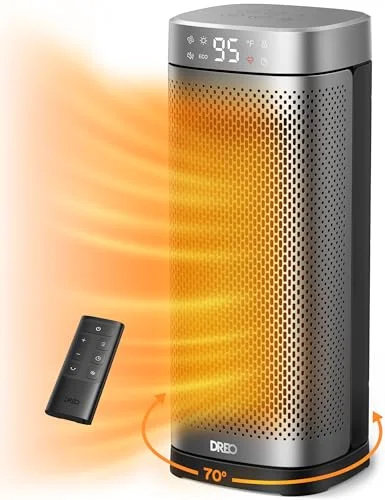
A basement runs colder than its square footage suggests, so the heaters that work best down there are the ones built to move warm air across the whole room rather than radiate into one spot. The DREO 16 Inch Electric Heater for Large Room ($59.46) is our pick if the basement is open or doubles as a rec room — it's built and marketed specifically for that larger footprint.
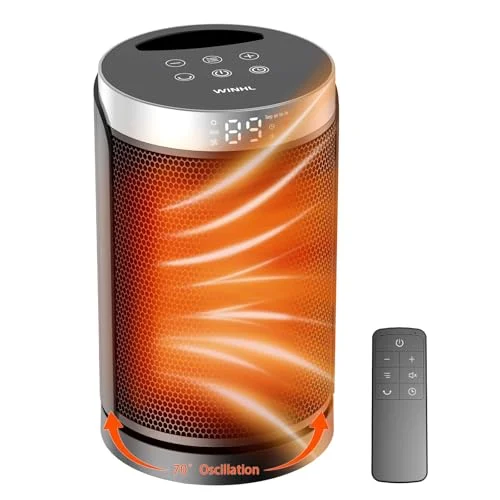
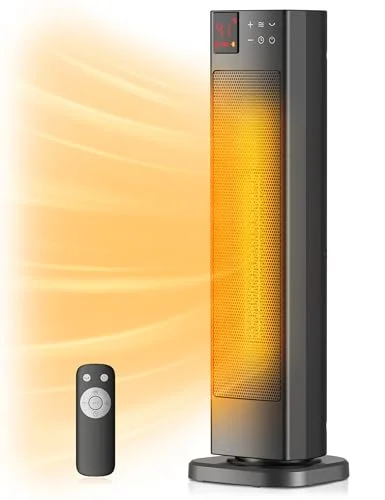
For a defined corner — a desk, a workbench, a single seating area near the stairs — the compact WINHL Portable Electric Heater ($28.46) with 70° oscillation covers more of a tight space than a fixed-point heater of the same size. The PELONIS 23″ Oscillating Ceramic Tower ($56.49) sits between the two: a timer and remote for a finished basement you treat like any other living space. None of the three replaces a dehumidifier if the real problem is damp air, not cold air.
Why a basement runs colder than its square footage suggests
A basement and the bedroom directly above it can share an identical floor plan on paper and still feel like two different climates. The bedroom has at least one exterior wall exposed to sun and outside air temperature that swings with the weather. A basement's walls, in most houses, are below grade — poured concrete or block sitting against surrounding earth that stays close to the same cool temperature year-round, regardless of how hot or cold it gets outside. That earth is an enormous, constant heat sink pulling warmth out through the walls, which is a different problem than the drafty window a space heater upstairs is fighting.
Basements are also frequently bigger than the number on a listing implies. An unfinished basement often runs the full footprint of the house above it, uninterrupted by the interior walls that break a main floor into separate rooms. A single space heater has to cover open square footage in every direction, and ductwork, support posts and storage shelving along the way all interrupt the straight line a heater's airflow would otherwise take. Add to that a basement's place in most heating systems — often the last zone on the ductwork run, or a space with no forced-air register at all — and it's a structural reason a basement reads colder than its square footage suggests, not something specific to any one house. For the general math on how heater output and room size relate, see our guide to how many watts your room actually needs before assuming a basement needs the same heater as the bedroom above it.
Concrete floors and the heat they absorb before the air does
Most basements, finished or not, have a concrete slab somewhere underfoot — under carpet, under laminate, or bare. Concrete has enormous thermal mass: it takes a long time to change temperature, and once it's cold, it stays cold, drawing heat out of anything that touches it. A rug or a pair of socks doesn't fix this; it only slows how fast your feet notice it. A space heater aimed across a room full of furniture and people still has to compete with a slab that is quietly pulling heat out of the air near the floor the entire time the heater runs.
This matters for where a heater's warm air actually goes. Warm air rises, which is useful in a room with a normal ceiling height and nowhere else for it to go, but it means the air nearest a cold concrete floor — the air you're actually standing and sitting in — is the layer losing heat fastest and gaining it back last. A heater that blows air level with a couch cushion is fighting a floor working against it the whole time, a different problem than a drafty window letting cold air in from outside.
None of the three heaters in this guide publish a spec for floor-level performance, because that isn't a figure the industry measures or reports. What we can say from the general physics of the room: oscillation that sweeps air across more of the floor's surface area, rather than holding a single column of warm air in one spot, does more to counteract a cold slab than raw wattage alone — one reason a moving airflow pattern matters more in a basement than in a carpeted, insulated bedroom upstairs.
Oscillation and reach: more useful here than in a small bedroom
In a small bedroom, oscillation is close to a convenience feature — the room is small enough that a fixed heater pointed at the bed covers most of the space anyway. A basement is a different shape of problem. It's frequently longer, more open and more likely to have a seating area, a workbench and a stairwell that are not all in the same sightline from one outlet. A heater that only throws heat in a straight line leaves most of that layout cold no matter how long it runs.
This is where the three picks in this guide separate from each other. The WINHL is built around 70° oscillation on a compact, 9.9-inch footprint — small enough to tuck beside a desk or a workbench, with a sweep wide enough to cover a defined zone of a basement rather than one fixed point. The PELONIS 23″ tower oscillates from a taller cabinet with a timer and remote, suited to a finished basement living area you want to set once and leave running rather than adjust by hand. The DREO 16 Inch is marketed specifically for large-room use, the category this guide leans on when the basement in question is genuinely open rather than broken into separate zones by furniture or framing.
For the full breakdown of how oscillating and fixed-point heaters differ beyond the basement use case, our guide to tilt versus oscillation covers the mechanical difference in more detail. The short version for a basement: a heater that sweeps air across more of a room's width does more useful work in an open, below-grade space than the same wattage fixed on a single point, simply because there's more floor plan to cover and fewer walls doing the job of keeping heat in one place.
Humidity and what it does to an electric heater over a season
A basement's relationship with humidity is different from a bedroom's for the same structural reason it's colder: below-grade walls sit against soil that holds moisture, and that moisture moves through concrete and into the room's air more readily than through an above-grade wall with siding and insulation. Many basements run measurably more humid than the floor above them, particularly in summer and after rain, even when nobody notices a problem.
Running a space heater in a damp room doesn't dry the room out the way a dehumidifier does — it just adds heat to air that's still carrying moisture, which is why a basement can feel both warm and clammy at once. Over a full heating season, that combination is harder on a heater's internals than dry air is: moisture in the surrounding air settles into dust, and dust mixed with moisture is what actually coats a fan blade, a heating element or a vent over months of use. None of the three heaters here publish a humidity or IP rating, so we're not going to claim one holds up better than another in a damp room — a gap in the published data, not a judgment on any specific unit. The honest, general point stands regardless of brand: a heater running daily in a basement works in a tougher environment than the same heater in a dry, above-grade bedroom, and keeping its vents clear of dust is worth doing more often down there.
The picks
Three heaters, three different basement layouts — a tight zone, a finished living area, and an open, larger footprint. None of them solves a damp basement on its own; see when a dehumidifier comes first below.
01Best for a defined zone
WINHL Portable Electric Space Heater
The compact pick: a wide sweep from a small footprint
70° Oscillation·9.9″ footprint·Indoor use
A compact unit built around a 70-degree oscillation sweep rather than a fixed heat column, which is the more useful spec in a basement corner than raw size. At a 9.9-inch footprint, it tucks beside a desk, a workbench or a single chair near the stairs without taking up floor space you need for storage or a treadmill — the kind of furniture a basement tends to collect. It's the right size for covering one defined zone of a larger room, not for filling an entire open basement on its own.
The pick for a workbench, a desk, or any one corner of a basement you're not trying to heat end to end.
02Best for a finished basement
PELONIS 23″ Oscillating Ceramic Tower
The set-and-forget pick: a timer and remote for a room you live in
Ceramic tower·23-inch Premium·Timer & remote·Oscillating
A 23-inch ceramic tower built with a timer and a remote, which matters more in a finished basement treated like an actual living space — a home theater, a guest suite, a playroom — than it does in a utility corner you only visit to do laundry. The remote and timer mean you can set a schedule from the couch instead of walking over to adjust a dial, and the taller cabinet oscillates from a height that clears a coffee table rather than blowing directly into it. It suits a basement that already has furniture, a rug and a reason to spend an evening down there.
Buy it for the room you'd actually choose to sit in, not the room you walk through to get to the water heater.
03Best for an open or large basement
DREO 16 Inch Electric Heater for Large Room
The reach pick: built for the footprint most basements actually have
16 Inch tower·Large Room·Indoor use
DREO markets this 16-inch tower specifically for large-room use, which is the category an open, unfinished basement falls into more often than a bedroom-sized comparison suggests. A basement that runs the full footprint of the house above it, broken up by support posts and storage rather than interior walls, is closer to the large, open floor plan this heater is built around than it is to a single enclosed room. For the brand's other sizes and what separates them, see our comparison of DREO's different heater models before choosing between this one and a smaller unit.
The pick if the basement is one open room rather than several furnished zones — reach matters more than a timer here.
All three stay under $100, which covers most basement use cases on its own. If the room is large enough, or cold enough, that a sub-$100 heater genuinely isn't enough, our guide to space heaters over $100 covers what the extra money actually buys before you spend it.
When a basement needs a dehumidifier before it needs a second heater
The instinct, once one heater isn't making a damp basement feel comfortable, is to add a second heater. That's frequently the wrong fix: damp air takes more energy to warm than dry air does, and it also makes a given temperature feel colder on skin than the same temperature in a dry room. A basement running at 65°F and 70% relative humidity can feel noticeably less comfortable than a bedroom at the same 65°F with normal indoor humidity — and no amount of additional heat output fixes that mismatch, because the problem isn't a lack of warmth.
Add a second heater when
The basement is dry to the touch, the air doesn't feel clammy or smell musty, and the problem is genuinely square footage — one heater can't physically reach both ends of a long, open room.
Run a dehumidifier first when
The air feels damp or smells musty, condensation shows up on pipes or windows, or the room feels cold even with a heater running — signs the humidity itself is the problem, not the wattage.
There's also a practical reason to deal with humidity before adding heat sources: a damp basement with a second electric heater running has more dust, more moisture and more electrical load than it had before — the exact combination covered above as the harder environment for a heater's internals over a season. Pulling moisture out of the air first, then heating the drier air that's left, asks less of every heater in the room. If the basement also doubles as a space pets spend real time in, the same case for a lower, more even background temperature applies as in our guide to homes with pets upstairs.
How we picked
We looked specifically for heaters marketed around oscillation, reach and large-room use rather than pulling three near-identical compact units that differ mainly in color, since a basement's shape and size make those qualities matter more than in a typical bedroom guide. The three products here cover three different basement footprints on purpose: a tight, defined zone, a finished living area, and an open, larger floor plan.
How we compared
We compared these three heaters on their published titles, available specifications, current Amazon prices and general public knowledge about how basements behave thermally — below-grade walls, concrete slabs and relative humidity. Where a listing doesn't publish a specific wattage, decibel or humidity-resistance figure, we say so plainly rather than estimate one; the size and oscillation details above come directly from each product's own listing data.
We do not run a testing lab. We do not own these three heaters and have not run them in a basement ourselves, so you will not find an invented decibel reading or a score out of ten anywhere on this page. We also don't show star ratings, review counts or paraphrased owner sentiment, because we don't have manufacturer-published figures for these specific listings — a limitation of the data available to us, not a judgment on the heaters themselves.
Frequently asked questions
Why does my basement feel colder than a bedroom of the same size?
Mostly because of what's on the other side of the walls and floor. A basement's walls typically sit below grade against soil that stays cool year-round, acting as a constant heat sink in a way an above-grade bedroom wall doesn't. The concrete slab underfoot does the same thing from below. Add a basement's tendency to run the full open footprint of the house above it, and the same square footage on paper ends up feeling like a bigger, colder room in practice.
Do I need a heater with oscillation for a basement specifically?
It helps more down there than it does in a small, enclosed bedroom. Basements are more likely to be open, longer, or broken up by support posts and storage rather than interior walls, so a heater that sweeps air across more of the floor's width reaches more of the room than a fixed-point heater of the same output. A defined, single-person zone near a desk or workbench needs it less than an open rec room does.
Should I buy a dehumidifier or a second space heater for a damp basement?
Start with the dehumidifier if the air feels damp, smells musty, or you see condensation on pipes or windows. Damp air takes more energy to warm and feels colder at a given temperature than dry air does, so adding heat without addressing moisture rarely fixes the discomfort. Drier air also asks less of the heater you already own, which is easier on the unit over a full season than running two heaters in a humid room.
Is it safe to run a space heater on a basement's concrete floor?
All three heaters in this guide are built for indoor use on a stable, level surface, and a bare or finished concrete floor qualifies as long as it's level and clear of rugs or cords that could trip the unit over. The concrete itself doesn't create a safety issue; the general space-heater rules still apply — keep it on its own outlet rather than an extension cord or power strip, and keep it clear of boxes and stored belongings, which basements tend to accumulate more of than other rooms.
Written by Ilane Tall. Research-based comparisons of published specifications, current prices and public product data — we do not physically test these units and we do not publish invented scores.