By Ilane Tall · Updated November 5, 2026 · Research-based.
Reader-supported: we may earn a commission when you buy through the links on this page, at no additional cost to you. It never changes which product we recommend. Prices quoted below were correct at the time of writing and move often.
Quick answer
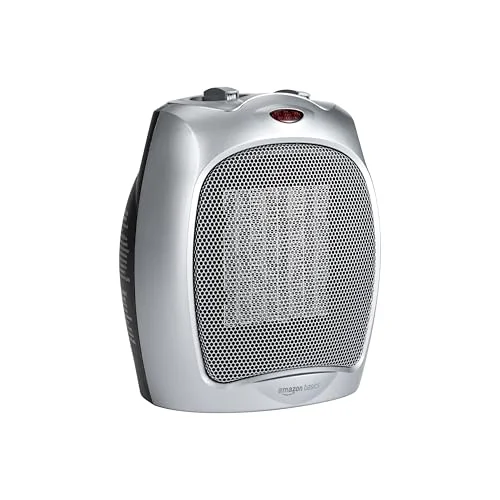
A rental apartment doesn't need the biggest heater on the market — it needs one that is cheap enough to replace without a fight, small enough to vanish into a closet on move-out day, and explicit about the safety features that matter when you don't own the building. The Amazon Basics Ceramic Space Heater ($17.59) is our pick: it's the only one of the three whose own title states overheat and tip-over protection, it's small enough to tuck on a shelf, and at twenty dollars it isn't a loss worth arguing about if a lease ends sooner than planned.
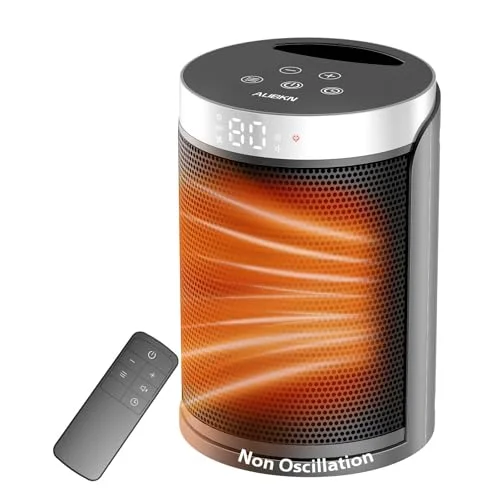
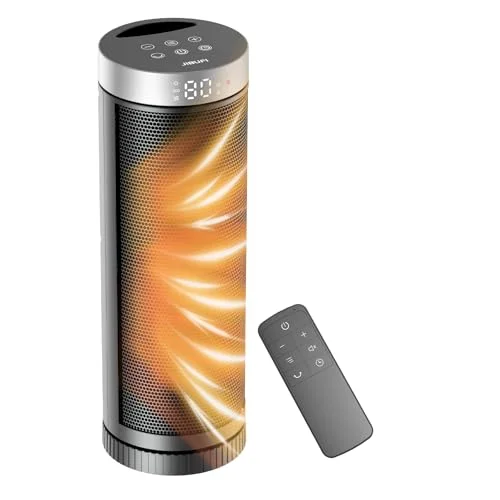
If you want a remote so you're not reaching behind a desk every time the room cools, the AUBKN Space Heater ($23.74) is the smaller, hands-off option. If you want one heater to move air across a whole studio instead of warming one corner, the JIBUFI 17-Inch ($37.98) oscillates through a 70-degree arc. All three, compared below.
Why a rental changes the brief
A homeowner shopping for a space heater is really asking one question: how much of this room can it heat? A renter is asking at least three more, and all of them involve someone else's property. Can I install it without touching a wall, a breaker box or anything the lease calls a "fixture"? Will it survive being packed into a box three times before the lease is up? And if it fails, breaks, or simply isn't needed anymore, is the money lost small enough that it doesn't matter?
None of that shows up on a spec sheet, but it decides which heaters belong on this page and which don't. A built-in wall unit, a hardwired baseboard heater, anything that requires an electrician or a hole in drywall is off the table by definition — a rental agreement that says nothing explicit about portable heat almost always says something explicit about alterations, and a space heater's entire appeal is that it plugs into an existing outlet and leaves nothing behind when it's unplugged. Every heater on this page is exactly that: a free-standing unit that arrives in a box, runs off a standard wall outlet, and leaves with you.
The three picks below also share something a homeowner might not prioritize: low enough cost that replacing one, or simply not taking it to the next apartment, is a shrug rather than a decision. At $17.59, $23.74 and $37.98, none of these three is a purchase you need to defend to a future version of yourself in a city you haven't moved to yet.
Overheat and tip-over protection: the non-negotiable, not the bonus
In a house you own, a space heater that tips over is your problem and your floor. In a rental, it's also your landlord's floor, your downstairs neighbor's ceiling, and very possibly a line item in whatever renters insurance you were told to buy before you got the keys. That's why automatic shut-off on tip-over, and a cutoff if the unit overheats, aren't nice extras here — they're the first thing worth checking, ahead of wattage, ahead of noise, ahead of how it looks on a shelf.
Of the three heaters here, the Amazon Basics Ceramic Space Heater is the one that states this outright: its own product title includes "With Overheat and Tip-Over Protection," which means the manufacturer is making that claim directly rather than leaving it implied. The AUBKN and JIBUFI listings we have don't spell out a tip-over or overheat feature in the title or specification data provided to us, and we're not going to credit either one with a safety feature its own listing doesn't state. That's not a claim either heater lacks the feature — plenty of small ceramic and PTC heaters in this price range include it as standard — it's a gap in the data we were given. If a specific certification matters to you, especially in a building where you don't control the wiring or the smoke detectors, read the safety-feature bullets on the current listing before you buy, not after.
A space heater that lives in your apartment for eighteen months also has to live in a box, a trunk, or the back of a closet for however many months it isn't plugged in — between leases, during a move, or simply in summer. That makes footprint a rental-specific spec in a way it usually isn't for a house: the question isn't just "does it fit the room," it's "does it fit the storage I actually have," which in most rentals is a shelf, not a basement. For a deeper look at how tower and compact shapes trade off floor space against reach, see our guide to tower versus compact space heaters.
The Amazon Basics unit is the smallest of the three by a clear margin: its listed dimensions are 7.52 inches deep, 6.34 inches wide and 9.45 inches tall, close enough to a large coffee mug's footprint that it sits on a single shelf without taking the shelf over. It's also non-oscillating, which in a small rental room is less of a limitation than it sounds — a fixed-direction heater pointed at a desk or a reading chair heats the spot you're actually sitting in, rather than sweeping heat across a studio you can just as easily reposition the unit within. The AUBKN is listed only as "small" in the data available to us, without exact dimensions; if the inches matter because you're measuring a specific shelf or nightstand, check the current listing rather than trust an estimate from us. The JIBUFI is the largest of the three at roughly 17 inches, the only one built as a short tower with a 70-degree oscillating sweep rather than a fixed, pocket-sized footprint — the trade worth knowing about if you're deciding between covering more of a studio apartment and fitting something in a closet. Our guide to tilt versus oscillation covers that trade in more depth.
The outlet you have, not the one you wish you had
A homeowner can call an electrician. A renter works with the outlets the apartment already has, in wiring that might predate anyone currently living there. That matters because a 1,500-watt heater draws roughly 12.5 amps, close to the working limit of a standard 15-amp household circuit, and older buildings — the kind that make up a large share of the rental stock in most US cities — are exactly where circuits are more likely to be shared across more than one room, or where a single bathroom and bedroom outlet trace back to the same breaker. Our guide on matching wattage to your room goes through the arithmetic in full.
The JIBUFI and Amazon Basics listings both state 1,500 watts directly. The AUBKN listing we have does not state a wattage figure; treat 1,500 watts as the reasonable working assumption for a plug-in heater of this type and price unless its own listing says otherwise, and don't assume a lower number just because the box doesn't print one. Whichever heater you choose, the practical rental habit is the same: plug it straight into a wall outlet, never into a shared extension cord or a power strip already carrying a lamp and a space-constrained kitchen's worth of small appliances, and if a breaker trips the moment the heater and something else switch on together, that's the circuit telling you it's shared — not a fault with the heater. If your building allows it, confirm with the landlord or a prior tenant which outlets in the unit share a breaker before you settle on where the heater lives.
The picks
Three heaters, three different trade-offs on the same rental brief — cheapest and most explicitly safety-labeled, smallest and hands-off, or largest footprint in exchange for covering more of a room.
01Best overall for a rental
Amazon Basics Ceramic Space Heater
The one whose safety claims are stated, not assumed
1,500 Watt ceramic·Overheat + tip-over protection·Non-oscillating·7.52"D x 6.34"W x 9.45"H
The product title does the thing most budget heaters leave to the fine print: it states overheat and tip-over protection directly, rather than making a buyer assume a $20 heater has the same shutoffs as a $100 one. At 7.52 by 6.34 by 9.45 inches it's the smallest of the three, small enough to live on a single shelf and pack flat into a moving box without eating a drawer's worth of space. It's non-oscillating, which in most rental-sized rooms means pointed warmth at a desk or a chair rather than a wide sweep you don't have the floor space for anyway. At $17.59, it's also the easiest of the three to walk away from if the lease ends before the heater does.
The pick if you want the safety features confirmed in writing and the lowest amount of money at risk.
02Best for hands-off control
AUBKN Space Heater
The small one you control from the couch
Remote included·Small footprint·Portable, indoor use·Exact dimensions: check listing
The remote is the entire argument for this one: in a rental bedroom or studio where the heater is often tucked in a corner or behind furniture to stay out of the walking path, being able to switch it off without crossing the room matters more than it would in a house with central heat as a backup. The listing data available to us describes the size only as "small" without exact measurements, so we won't guess inches we don't have — if you're measuring against a specific nightstand or shelf, confirm the dimensions on the current listing first. We also don't have a stated wattage for this unit; treat it as a standard plug-in heater for the purposes of outlet and circuit planning, the same as the other two.
Buy it for the remote, not for a dimension you can't yet confirm.
03Best for covering more of a studio
JIBUFI 17-Inch Space Heater
The one built to move the heat, not just make it
1,500 Watt·70° oscillation·~17 in. tall·16.4" variant listing
At roughly 17 inches tall — the variant data lists 16.4 inches against a 70-degree oscillation spec — the JIBUFI is the only heater of the three built to sweep its output across a room rather than stay pointed in one direction. In a studio apartment or an open one-bedroom where a single heater has to do more than warm one chair, that oscillating sweep covers meaningfully more floor than a fixed unit can from the same spot, at the cost of being the largest of the three to store when the season ends. It states 1,500 watts directly, the same ceiling as the Amazon Basics unit, which means the extra coverage comes from where the heat is aimed, not from extra power behind it. Our guide to tilt versus oscillation covers why that distinction matters more than wattage once a room gets bigger than one corner.
The pick if one heater needs to reach both the desk and the couch, and you have a closet shelf tall enough for it.
All three sit comfortably below the $50 mark; for a wider comparison that stretches into the $50–$100 range for anyone willing to spend a little more for extra features, see our roundup of space heaters between $50 and $100. And if the apartment in question is smaller still — a studio, a basement unit, or anything closer in scale to an RV — our guide to heaters for RVs and small spaces covers the same footprint problem from the other direction.
What to photograph before you plug one in, for the walkthrough
The move-out walkthrough is where a space heater can quietly cost a renter part of a deposit, not because the heater caused damage but because nobody can prove it didn't. A heating element run for months in the same spot can leave a faint discoloration on carpet or a baseboard, a cord pinched under a rug can leave an indentation, and an outlet that already had a hairline crack in its faceplate before you moved in looks exactly like one you caused if there's no record otherwise. None of this requires the heater to have done anything wrong — it requires you to have no proof of the apartment's condition before you started using it.
Before you plug a heater in for the first time in a new place, a few photos take less time than finding the box it came in:
- The outlet itself. A close, well-lit photo of the faceplate, front-on, showing any existing cracks, scorch marks or discoloration around the slots.
- The floor and baseboard where the heater will sit. Carpet, hardwood or vinyl, photographed before the heater's feet or cord have touched it, so any pre-existing stain, scratch or warp is on record as pre-existing.
- The wall directly behind and above where the heater will run, especially if it's near a curtain, bedding or furniture, since radiant heat left running for a long time can faintly discolor paint over months.
- Any extension cord, power strip or outlet cover already installed in that spot, so you have a record of what you found versus what you added or removed.
None of this is about proving a heater is safe — the tip-over and overheat features covered above do that job. It's about proving what the apartment already looked like, which is the one piece of evidence a landlord can't dispute with photos of their own, because you took them first.
How we picked
We started from our own database of space heaters listed for sale in the US and filtered specifically for units suited to a rental's constraints: no installation beyond a standard wall plug, a price low enough to be a low-stakes purchase, and a footprint small enough to store between leases. We then favored the heater whose own listing states a tip-over and overheat shutoff explicitly over otherwise-similar units where that information simply wasn't provided, because in a rental that distinction is worth more than a few extra dollars of features elsewhere.
How we compared
We compared the three heaters on their published titles, available specifications and current Amazon prices. Where a listing states a figure — the Amazon Basics unit's dimensions and safety features, the JIBUFI's wattage and oscillation angle — we cite it directly. Where a listing is silent, as with the AUBKN's exact dimensions and wattage, we say so plainly rather than estimate a number to fill the gap. We don't run a testing lab, we don't own these three heaters, and we haven't run them side by side in an apartment ourselves; what we can do honestly is read every available specification and compare them against each other and against what a rental specifically needs. We also don't show star ratings, review counts or paraphrased owner sentiment on this page, because we don't have manufacturer-published figures for these specific listings.
Frequently asked questions
Will my landlord or lease care about a portable space heater?
Most leases don't single out portable electric heaters the way they single out pets or subletting, because a plug-in heater isn't an alteration to the unit — it doesn't touch wiring, walls or fixtures. That said, lease terms vary by building and by state, and some do restrict space-heater use for fire-safety reasons, particularly in older buildings. Read your own lease for any clause mentioning portable heating or fire hazards, and when in doubt, a short message to the landlord or property manager costs nothing and settles the question for good.
What should I photograph before I plug one in, for the move-out walkthrough?
The outlet faceplate, the floor and baseboard where the heater will sit, and the wall behind it, all photographed before the heater has run even once. The goal is a record of what the apartment looked like before you added anything, so any pre-existing mark can't later be attributed to the heater.
Will a space heater trip the breaker in an older building?
It can, more often in older buildings than new ones, because a 1,500-watt heater draws roughly 12.5 amps against a standard 15-amp circuit's rating, and older wiring is more likely to share a single circuit across more than one room. Plugging the heater directly into its own wall outlet, rather than an extension cord shared with other appliances, is the single habit that prevents most of these trips.
Can I take the heater with me when I move out?
Yes — every heater on this page is a free-standing, plug-in appliance, not a fixture, so it belongs to you and leaves when you do. That's part of why footprint and price matter so much for a rental pick: a heater that packs flat into a box and didn't cost much to begin with is one less thing to think twice about when the lease is up.
Written by Ilane Tall. Research-based comparisons of published specifications, current prices and public product data — we do not physically test these units and we do not publish invented scores.