By Ilane Tall · Updated November 15, 2026 · Research-based.
Reader-supported: we may earn a commission when you buy through the links on this page, at no additional cost to you. It never changes which product we recommend. Prices quoted below were correct at the time of writing and move often.
Quick answer
A "heats up in 2 seconds" or "3 seconds" claim is almost always true, and almost always about the heating element itself, not the room it sits in. A PTC ceramic element genuinely does reach working temperature in a couple of seconds — that's real physics, not marketing fluff — but the air in your living room doesn't warm on the element's schedule. It warms on wattage, room volume and airflow, which is a job measured in minutes, not seconds.
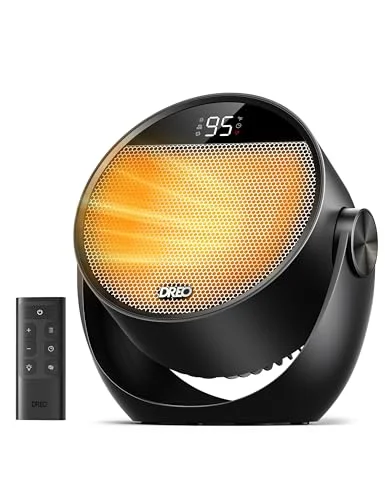
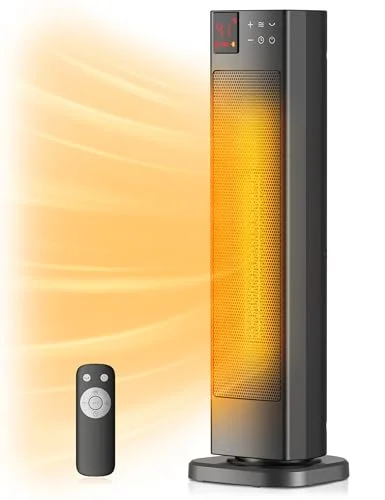
The DREO 1500W Office Heater ($42.49) and the PELONIS 23" Oscillating Tower ($56.49) both use the fast-heating ceramic technology this claim is built on, and both are genuinely quick to take the chill off a small space because a small space has little air to move. The Amazon Basics Oil Radiator ($58.11) makes no seconds claim at all, because it can't — and that's the honest 15-to-20-minute tradeoff worth understanding before you buy one.
What "2 seconds" and "3 seconds" are actually measured on
Start with the part of the claim that's true. Most compact ceramic and PTC (positive temperature coefficient) space heaters use a heating element built from stacked ceramic plates with a genuinely low thermal mass — there isn't much material to bring up to temperature, so the element itself can go from room temperature to hot enough to warm air passing over it in a couple of seconds. That's a real, physically grounded number, not a figure invented for a spec sheet, and it's the reason this category of heater — the kind the DREO 1500W Office Heater and the PELONIS 23" Oscillating Tower both represent — gets marketed around instant heat in the first place.
What the claim is not measuring is anything you'd actually feel standing six feet away. It isn't room temperature, air temperature at head height, or how long until the chill is gone from a 150-square-foot bedroom. It's the element's own surface or core temperature, tested in isolation, the instant electricity reaches it. Nothing about that number describes the fan that has to move the resulting warm air, the volume of cold air already sitting in your room, or the heat your walls, windows and furniture are quietly absorbing the entire time the heater runs. A seconds claim is a true statement about a component. It becomes a misleading one the moment a shopper reads it as a statement about a room.
The element heats first. The room follows on its own schedule.
Once the element is hot — and again, that part really does happen almost instantly on a ceramic or PTC design — the heater's job has barely started. A fan pulls room-temperature air across that element, and the air leaves warmer than it arrived but not hot, because it's only in contact with the element for a fraction of a second. That thin stream of warm air then has to mix into the room's existing air, which outnumbers it enormously: a single pass through a 1,500-watt heater is a trickle moving into a room that might hold hundreds of cubic feet of air that hasn't moved at all.
Warming all of that air to a temperature you'd call comfortable takes repeated passes, which takes time — exactly the variable the 2-second claim sidesteps. Every additional cubic foot of air is additional thermal mass the heater has to work through, at a rate capped by its wattage; the DREO and the PELONIS both draw power from the same standard US outlet, and neither can move heat into a room faster than its wattage allows no matter how quickly its own element gets hot. The element's instant readiness and the room's gradual warming are two different physical processes on two different clocks, and a claim that only reports the first one isn't lying — it's just answering a different question than the one you're asking.
There's a second factor working against the room as hard as air volume does: everything else in it. Walls, windows, furniture and floors all sit at the room's starting temperature and absorb some of the warm air's heat as it circulates, acting like a thermal sink that keeps pulling warmth back out before you feel the benefit. A heater needs to keep adding heat faster than the room's surfaces are quietly soaking it up, which is a big part of why the first few minutes of running any heater feel like little progress before the room visibly turns a corner.
Oil-filled radiators and the 15-to-20-minute reality nobody markets
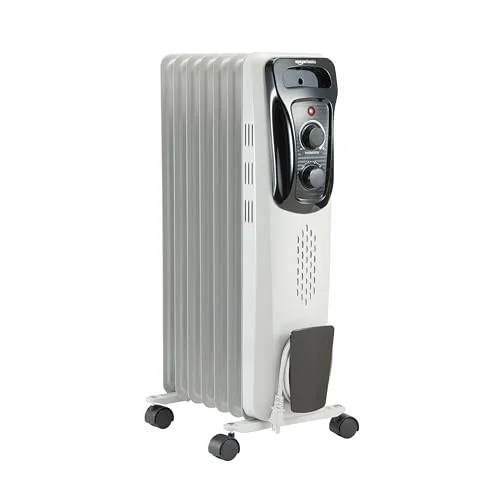
The Amazon Basics Oil Radiator Heater is the clearest contrast on this page, because its listing makes no seconds claim at all — and that omission is itself honest. An oil-filled radiator works by electrically heating a reservoir of oil sealed inside its steel fins (seven of them on this model), and that oil has to come up to temperature before the fins radiate meaningful heat into the room. Oil has real thermal mass; it doesn't snap to temperature the way a thin ceramic plate does. Depending on the room and the thermostat setting, a unit like this commonly needs somewhere in the range of 15 to 20 minutes before the fins are reliably warm and the room starts to feel the difference — a number nobody prints on the box, because it makes a worse headline than "instant heat," even though it describes exactly how the product works.
That slow start is the tradeoff for what the design gives up in exchange: once the oil is hot, it keeps radiating heat for a long time after the unit shuts off, because the reservoir holds its temperature the way a radiator always has. There's no fan moving air and no element cycling on and off rapidly, which is also why oil-filled radiators run close to silent — a point worth connecting to our guide to space heaters for allergy- and dust-sensitive homes, where the same lack of a fan is the main reason these units show up as a pick for a different problem entirely.
None of this makes the Amazon Basics radiator a worse purchase than the ceramic options here — it makes it a purchase for a different kind of patience. Turn a bedroom heater on the moment you walk in and want results before you've finished undressing, and an oil-filled radiator will frustrate you nightly. Turn it on half an hour before you actually need the room warm — before dinner, on a timer — and the slow heat-up stops being a downside, because you've planned around it instead of against it.
Why a small room feels the claim, and a large one never does
The seconds claim survives contact with reality best in a small, enclosed space, which is exactly where PTC ceramic heaters like the DREO 1500W Office Heater are most often used and marketed: a desk, a cubicle, a dorm room, a single enclosed bedroom. In a small space, the total volume of air to warm is small too, so the gap between "the element is hot" and "the room feels warmer" collapses to something that genuinely can feel like seconds. Readers weighing exactly this tradeoff for a shared living space should see our guide to space heaters for a college dorm, where fast recovery in a small room is a real, earned advantage rather than a marketing exaggeration.
Scale the same heater up to a large, open or poorly sealed room and the claim falls apart for reasons that have nothing to do with the heater being any less capable. The air volume multiplies, the distance to the far side of the room grows, and any draft, high ceiling or open doorway bleeds heat away faster than a fixed-wattage unit can replace it. A 1,500-watt heater that feels nearly instant in a 10-by-10 office can take considerably longer, or never fully catch up, in a great room or a drafty basement — a pattern covered in more detail in our basement space heater guide, where cold concrete and below-grade drafts work against recovery time the same way an open floor plan does upstairs.
This is also why a heater that oscillates, like the PELONIS 23" Oscillating Tower, behaves differently from a fixed-direction heater of the same wattage in anything but a small room. Oscillation doesn't add heat; it redistributes the same fixed output across more of the room's floor area instead of concentrating it in one line of sight, which matters more as the room gets bigger and a stationary heater's "cone" of warmed air covers a shrinking share of the total space.
What actually shortens the wait — not the spec sheet
If the number on the box doesn't predict how long you'll actually wait, three things do, and all three are under your control at the moment you set the heater up rather than baked into the model you bought.
Wattage sets the ceiling on how fast heat can enter the room at all. Both the DREO 1500W Office Heater and the Amazon Basics Oil Radiator state 1,500 watts — the practical limit for a plug-in heater on a standard US 15-amp circuit — so between those two, wattage isn't the variable that explains the different experience; delivery method is. A unit cycling at a lower power setting to save energy will always take longer to warm the same room than one running at full rating, regardless of how quickly its element itself heats up.
Placement decides how much of that wattage reaches you versus how much gets lost to the room's largest cold surfaces. A heater aimed at a window, pushed into a corner, or set up far from where you're sitting is fighting drafts and dead air instead of warming the space you care about. Moving the same heater closer to you and clear of obstructions routinely does more for how fast you feel warm than any spec difference between two similarly priced models.
Oscillation, where a heater has it, trades a narrower but faster-feeling blast of heat for broader, slower, more even coverage — the PELONIS 23" Oscillating Tower is built around exactly that tradeoff, with a remote and timer so it can be set running before you're actually in the room. That's the move worth making regardless of which heater you own: start it a few minutes early, on a timer or an app, rather than waiting until you're cold to flip the switch. Readers who want that scheduling built in should see our guide to app- and Alexa-controlled space heaters.
The picks, matched to how much waiting you can tolerate
Not a ranked list — a match to three different tolerances for waiting, since that's the actual decision this page is about.
01Least waiting
DREO Space Heater 1500W, 60° Adjustable Tilt
For a desk or a small office where a small volume of air does the rest of the work
1,500 Watt·60° adjustable tilt·10 inch·Ceramic/PTC class
A compact, 1,500-watt heater built on the ceramic PTC technology that makes the seconds claims true in the first place — its own element genuinely reaches working temperature almost immediately. What makes it feel fast in practice isn't the element alone; it's that an office-sized footprint of air is small enough for 1,500 watts to work through quickly. The 60-degree adjustable tilt lets you aim that output directly at where you're sitting, the placement advantage this page keeps coming back to.
The pick if the room you're heating is really a desk's worth of air, not a whole room's.
02Moderate waiting, bigger area
PELONIS 23" Oscillating Ceramic Tower Space Heater
For a bedroom or living area where coverage matters more than the fastest possible first minute
Ceramic tower·Oscillating·Timer & remote·23 inch Premium
A taller ceramic tower built to oscillate, trading a narrower, faster-feeling stream of heat for coverage across more of a room's floor area — the tradeoff covered above, made explicit in a single product. The included timer and remote mean it can be started before you walk into the room, which does more for how fast the space feels warm than any element-level spec. We don't have a stated wattage for this listing, and we're not going to estimate one to fill the page.
The pick if you'd rather wait a little longer and have the whole room feel it, instead of just one corner.
03Most waiting, fewest downsides once it's running
Amazon Basics Portable Oil Radiator Heater
For anyone who can start it 15-20 minutes early and wants silence in return
1,500 Watt·7 oil-filled steel fins·3 heat settings·11"D x 14.8"W x 25.2"H
A straightforward oil-filled radiator, 1,500 watts, with seven oil-filled steel fins, three heat settings, over-heat protection, tip-over protection and an ETL safety certification. It makes no seconds claim because the physics doesn't support one — budget the 15-to-20-minute reality covered above, and start it before you need the room warm rather than the moment you walk in. In exchange, it runs with no fan noise and keeps radiating heat for a stretch after you turn it off.
The pick if you can plan fifteen minutes ahead and silence matters more to you than a fast first minute.
A seconds claim is worth trusting when
You're heating a small, enclosed space — a desk, a dorm room, a single bedroom — where there's little air volume for the heater to work through and the element's own quick response time is most of what you'll actually notice.
It stops meaning much when
The room is large, open or drafty, the heater is set to a lower power level, or it's aimed away from where you actually sit — all cases where wattage, placement and airflow decide the real timeline, not the element.
This same logic matters before a workout, not just before bed: anyone warming a home gym ahead of a session should see our guide to space heaters for a home gym, where starting the heater early solves the exact waiting problem this page is about.
How we picked
We looked for three heaters that represent genuinely different points on the heat-up timeline rather than three near-identical ceramic towers: a compact PTC desk heater built around the fastest end of the claim, an oscillating ceramic tower built around broader coverage, and an oil-filled radiator that makes no speed claim at all because its underlying technology doesn't support one.
How we compared
We compared the three heaters on their published titles, available specifications and current Amazon prices. Where a listing states a wattage — 1,500 watts for both the DREO office heater and the Amazon Basics radiator — we cite it directly. The PELONIS listing we worked from does not include a stated wattage, and we say so plainly above rather than estimate one to fill a gap. The 15-to-20-minute oil-radiator warm-up and the couple-of-seconds PTC element response referenced throughout this page describe how each heating technology generally behaves, not a measurement we ran ourselves on these specific units.
We do not run a testing lab. We do not own these three heaters and have not timed them in a room ourselves, so you will not find a stopwatch reading or a score out of ten anywhere on this page. We also don't show star ratings, review counts or paraphrased owner sentiment, because we don't have manufacturer-published figures for these listings — a limitation of the data available to us, not a judgment on the heaters themselves.
Frequently asked questions
Is a "heats up in 2 seconds" claim actually false advertising?
Generally no — it's typically true of the heating element itself. PTC ceramic elements have genuinely low thermal mass and can reach operating temperature in roughly that timeframe. The claim becomes misleading only if you read it as a promise about the room, which it was never actually describing. The room's warm-up time depends on wattage, air volume and airflow, not the element's response time.
Why doesn't my oil-filled radiator ever advertise a fast heat-up time?
Because it genuinely can't make that claim honestly. An oil-filled radiator has to bring a reservoir of oil up to temperature before its fins radiate meaningful heat, which commonly takes somewhere in the range of 15 to 20 minutes depending on the room and setting. That's the tradeoff for a radiator's other advantages — no fan noise, and heat that keeps radiating after it's switched off.
Does a bigger room really change how long a heater takes, even at the same wattage?
Yes, substantially. Wattage sets a fixed rate at which heat can enter a room, but a larger room has far more air volume, more wall and window surface quietly absorbing heat, and often more drafts pulling warmth back out. The same 1,500-watt heater that feels nearly instant in a small office can take considerably longer, or never fully catch up, in an open-plan living room.
What's the single biggest thing I can do to feel warm faster, regardless of which heater I own?
Start it before you need it. A heater running on a timer or app for ten to fifteen minutes before you walk into the room removes the wait entirely, which does more for how fast a space feels warm than any difference in the heater's own spec sheet.
Written by Ilane Tall. Research-based comparisons of published specifications, current prices and public product data — we do not physically test these units and we do not publish invented scores.