By Ilane Tall · Updated November 11, 2026 · Research-based.
Reader-supported: we may earn a commission when you buy through the links on this page, at no additional cost to you. It never changes which product we recommend. Prices quoted below were correct at the time of writing and move often.
Quick answer
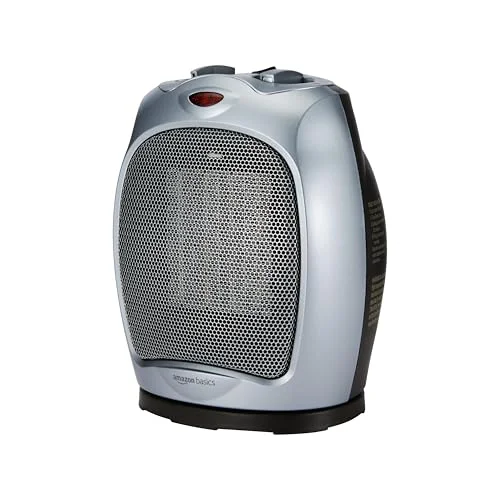
A home gym doesn't need a heater that runs all day — it needs one that can warm a mat-sized working area in the ten or fifteen minutes before you start, then switch off once your own body takes over. The Amazon Basics Oscillating Ceramic Space Heater ($32.99) is our pick: it states Fast Heating Technology, an adjustable thermostat and overheat and tip-over protection directly in its listing, and its compact footprint keeps it out of the way of a floor routine.
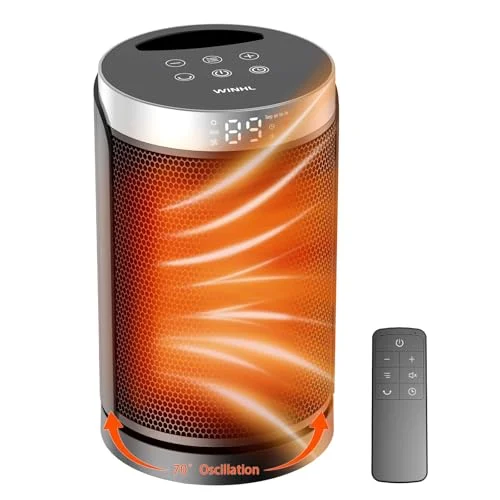
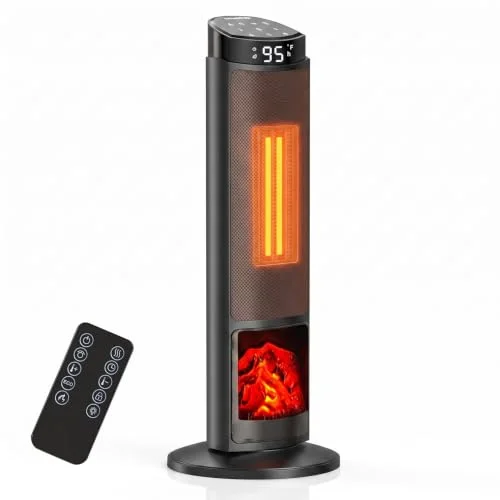
If your gym corner is genuinely tight, the WINHL Portable Electric Heater ($28.46) is the smallest of the three and still oscillates through 70 degrees. If you're heating a bigger converted garage or basement space, the OLIXIS 23" Space Heater ($39.93) has the tallest cabinet and four heat modes to match a colder room — with a placement caveat covered below. See the full breakdown in the picks.
The actual brief: warm the room before you start, not during
Most space heater buying guides assume you want heat for as long as you're in the room — a bedroom through the night, a living room through an evening. A home gym breaks that assumption completely. The useful life of the heat is the warm-up: the five to fifteen minutes between walking into a cold garage, basement or spare room and actually starting to move. Cold muscles and cold joints are the reason to heat the space at all, and that reason disappears the moment your heart rate climbs and your own body starts generating more heat than any 1,500-watt appliance is going to add on top of it.
That changes what "good" looks like in this category. A heater rated for an all-night shut-off timer, the spec that matters most in a bedroom roundup, is irrelevant here — you want the opposite: something you can turn on, let run for a short, defined stretch, and turn off again without ceremony. Fast heat-up matters more than low noise, since you're not trying to sleep through it. And a wide, even spread across the floor area matters more than a single powerful beam aimed at one spot, since a warm-up routine moves you around far more than a fixed desk chair or a sofa does.
Home gyms also tend to live in the coldest rooms in a house for the mundane reason that they're the rooms with spare floor space: a garage, a basement, an unheated bonus room over a porch. If that's where yours is, the baseline temperature you're starting from is already working against you before the heater runs for a single minute — our guide to heating a basement covers the extra humidity and square footage you're often fighting in exactly that kind of room, and it's worth a read if your "gym" and your "basement" are the same floor plan.
Why oscillation matters more here than in a bedroom
In a bedroom, a space heater has one job: warm the few square feet around a bed or a chair where a person sits still for hours. A fixed-direction heater, or even one that oscillates only slightly, does that job fine, because the target doesn't move. A home gym inverts that completely. In the span of one warm-up you might be standing for a dynamic stretch, kneeling for hip openers, lying flat for a core sequence, and standing again at a rack three feet away — and a heater aimed at one spot on the floor is only doing useful work for the fraction of that time your body happens to be in its path.
This is the specific reason oscillation is worth paying attention to on this page in particular, more than it would be for, say, a reading chair. Two of our three picks state it directly: the WINHL heater and the OLIXIS 23" heater are both listed with 70° oscillation, sweeping a meaningfully wide arc rather than staying pointed at a single patch of floor. The Amazon Basics heater is listed as an "Oscillating Ceramic" heater as well, though its listing doesn't give us a specific sweep angle, so we'll state only what we can confirm: it oscillates, without putting a number on how wide. If the exact arc matters to your layout, the current listing is the place to check it, not a guess on this page.
The practical upshot: in a home gym, oscillation isn't a nice-to-have feature that makes a heater feel more premium. It's closer to the actual job description, because a 70-degree sweep across a mat covers more of the space a moving body actually occupies than a static heat source pointed at wherever it happened to be aimed when you plugged it in. For a deeper look at how oscillating and tilting heaters differ mechanically and when each design wins, our guide to tilt versus oscillation breaks down the distinction in more detail than this page needs to.
Floor clearance around mats, weights and a moving body
A space heater sitting on the floor of a living room has to contend with foot traffic and the occasional curious pet. A space heater sitting on the floor of a home gym has to contend with dropped kettlebells, a rolled-out mat that changes the usable footprint every session, and a body that's actively moving through space rather than walking past it. That's a meaningfully different risk profile, and it's worth a specific look at what each of these three heaters actually tells us about handling it.
Of the three, only the Amazon Basics heater states overheat and tip-over protection directly in its own listing, alongside an adjustable thermostat. That's a real, checkable spec, and it's one reason it's our top pick for a room where a heater sitting near a weight rack has a non-zero chance of getting bumped. The WINHL and OLIXIS listings in our data don't state a tip-over protection feature one way or the other — that's a gap in what we have, not a claim that they lack it, so if that specific protection matters to you, confirm it on the current listing before you buy either one.
Height is the other variable worth thinking about specifically in this room. The OLIXIS is the tallest of the three at 23.62 inches, versus a roughly 9-to-9.5-inch footprint for the other two. A taller, narrower cabinet standing upright near a spot where a loaded barbell or a kettlebell gets set down has more leverage to tip if it's clipped by an elbow or a dropped weight than a squat, low-profile heater does. None of that makes the OLIXIS a bad choice — a bigger converted garage genuinely benefits from a taller unit's reach — it just means the honest placement advice is to keep it in a corner outside your actual working footprint, with the cord routed along a wall rather than across the floor where a mat gets rolled out.
The general rule that applies to all three: give the heater its own clear patch of floor, outside the radius of a kettlebell swing or a loaded bar coming off a rack, and unplug or move it before you get into anything on the ground. If your gym space doubles as part of a rented apartment, the same tip-over and overheat questions carry extra weight because you don't want to be explaining a scorch mark to a landlord — our guide to heaters for a rental apartment covers that angle directly.
Condensation and sweat: what a fan heater handles better than oil-filled
A home gym generates humidity fast once a session starts — sweat on a mat, condensation on a mirror or a cold window, a water bottle sweating onto the floor. None of that is a problem for the heater while you're warming up, since it's off by the time any of it shows up in volume. But it's worth understanding, in general terms, why the heater type matters for a room that goes from cold and dry to warm and damp in the space of one workout.
As a category, an oil-filled column radiator works by heating a sealed reservoir of oil inside a stack of exposed fins, radiating warmth slowly off a large metal surface. Those fins are effectively a series of crevices, and in a room where ambient humidity spikes, moisture has somewhere to settle and linger between uses. A ceramic or fan-driven heater works differently: it pulls air across a heating element and pushes it back out, and that continuous airflow is generally better at keeping moisture from pooling anywhere on the unit, because the air moving through it is doing some of the same job a bathroom exhaust fan does. All three of our picks here are fan-driven units rather than oil-filled radiators, which fits a room where the air doesn't stay dry for long once you're moving.
None of this is a substitute for basic electrical common sense, and it applies in a home gym exactly as much as it does anywhere else water and a wall outlet are both present. Keep any of these heaters, and their cords, clear of a sweating water bottle, a damp towel left on the floor, or a mat that's been wiped down and is still wet. If your space shares any of the same moisture concerns as a bathroom — a nearby shower, a laundry hookup, a slab floor that sweats in humid weather — our guide on running a space heater safely around moisture covers the GFCI and placement basics that carry over directly.
The picks
Three oscillating heaters built around the same short, intense job — not ranked by which is "best" in the abstract, since the right one depends on how tight your gym corner is and how cold the room runs before you ever turn a heater on.
01Best overall for a home gym
Amazon Basics Oscillating Ceramic Space Heater
Fast heat, a stated thermostat, and stated tip-over protection
Oscillating ceramic·1500W·Adjustable thermostat·Overheat & tip-over protection
This is the only one of the three whose listing states overheat and tip-over protection outright, alongside Fast Heating Technology and an adjustable thermostat — three specs that line up almost exactly with what a home gym actually needs: quick warmth, a way to hold a set temperature rather than running flat out, and a safety feature that matters near a weight rack. At 7.52"D x 6.34"W x 9.45"H it's a compact, low-profile cabinet that tucks into a corner without eating into floor space you need for a mat.
The pick if you want one heater that does the pre-workout job well and gets out of the way for the rest of the session.
02Best for a tight corner
WINHL Portable Electric Space Heater
The smallest footprint, with 70° oscillation
70° oscillation·9.9" size·Indoor use
At roughly 9.9 inches, this is the most compact of the three, which matters in a home gym where floor space is the whole point of the room. It states a 70-degree oscillation sweep in its own listing, the same confirmed arc as the OLIXIS below, so it covers a genuinely wide stretch of mat rather than warming one fixed spot. Its listing doesn't give us a stated wattage or a tip-over protection feature, so we won't claim either — check the current listing directly if those specifics decide your purchase.
The pick if your gym space is a converted closet or a narrow strip of garage and every inch of floor counts.
03Best for a bigger garage or basement gym
OLIXIS 23" Space Heater
The tallest cabinet, four heat modes, 70° oscillation
70° oscillation·4 modes·23.62"H·9.09"D x 7.87"W
The tallest of the three at 23.62 inches, with four heat modes listed, which gives it more flexibility to match a colder, larger space like a converted garage than a single-setting compact unit can offer. It shares the 70-degree oscillation sweep with the WINHL heater, so coverage across a wider mat area isn't a tradeoff here. The height is the thing to plan around, as covered above — keep it in a corner clear of where weights actually land, not inside the working footprint of your routine.
The pick if the room is big enough, and cold enough, that a compact heater just won't keep up.
| Model | Best for | Oscillation | Size | Price | Get it |
|---|
 Amazon Basics Oscillating Ceramic |
Overall / near weights |
Oscillating (angle not stated) |
7.52"D x 6.34"W x 9.45"H |
$32.99 |
Get it |
 WINHL Portable Electric Heater |
A tight corner |
70° |
9.9" size |
$28.46 |
Get it |
 OLIXIS 23" Space Heater |
A bigger garage or basement gym |
70° |
9.09"D x 7.87"W x 23.62"H |
$39.93 |
Get it |
Turning it off before the cardio portion begins
The pre-heat is only half the brief. The other half is remembering to actually switch the heater off once your warm-up ends and the working part of the session starts. This isn't just a comfort preference — it's the point of the whole exercise. A body that's moving through cardio or a weight circuit generates its own heat quickly, and a 1,500-watt heater still running on top of that is working against the thing you're trying to do, pushing a room that was comfortable ten minutes ago toward uncomfortably warm while you're already breathing hard.
An adjustable thermostat, like the one stated on the Amazon Basics heater, helps here as a passive backstop: once the room reaches the temperature you've set, the unit stops adding more rather than running at full output indefinitely. But a thermostat holding a room at a set temperature isn't the same as the heater being off, and it isn't a substitute for actually unplugging or switching it off your way out of the warm-up and into the main set. None of the three heaters on this page offer app or voice control that would let you schedule that shutoff remotely or from across the room — if that kind of convenience matters enough to be worth paying for, our guide to space heaters with app or Alexa control covers which heaters in this category actually offer it and whether the extra cost is worth it over a simple manual switch.
Heater on
During the warm-up: static stretching, mobility work, the first few minutes of standing around a cold room before your body is producing its own heat.
Heater off
Once cardio, circuits or anything that raises your heart rate begins — your own output takes over, and a running heater is now working against the session, not for it.
In practice, the easiest habit is to treat the heater the same way you'd treat a jacket: it comes off, literally, the moment you start moving in earnest. Set it running while you lay out a mat and load a bar, then switch it off as the first dynamic movement starts. It costs nothing and takes one extra second at the wall outlet, and it's the difference between a heater that's doing its one job well and one that's quietly working against the workout it was bought for.
How we picked
We started from our own database of space heaters listed for sale in the US and looked specifically for compact, oscillating models, since a static heat source aimed at one spot on the floor doesn't suit a room where the whole point is that a person moves through most of it. All three picks here are oscillating, fan-driven heaters rather than radiant or oil-filled units, chosen because that combination fits the short, hot-start, humidity-prone job a home gym actually asks a heater to do.
How we compared
We compared the three heaters on their published titles, available specifications and current Amazon prices. Where a listing states a number — the Amazon Basics heater's 1500W rating, or the stated 70-degree oscillation and dimensions on the WINHL and OLIXIS heaters — it comes directly from the product's own listing. Where a listing doesn't give us a figure, such as a wattage rating for the WINHL and OLIXIS heaters or a tip-over protection claim for either of them, we say so plainly in the text above rather than fill the gap with a guess.
We do not run a testing lab. We have not physically tested these three heaters in a gym, a garage or anywhere else, so you won't find an invented decibel reading, a made-up heat-up time in seconds, or a score out of ten anywhere on this page. We also don't publish star ratings, review counts or paraphrased owner sentiment, because we don't have manufacturer-published figures for these specific listings — a limitation of the data available to us, not a judgment on the heaters themselves.
Frequently asked questions
Do I need an oscillating heater for a home gym specifically?
It's more useful here than in almost any other room. A home gym warm-up moves you across a mat-sized area rather than keeping you seated in one spot, so a heater that sweeps through an arc — 70 degrees on both the WINHL and OLIXIS heaters here — covers more of the floor you're actually using than a fixed-direction heater pointed at a single patch of carpet.
How long before a workout should I turn the heater on?
Roughly ten to fifteen minutes is the useful window for most rooms, since that's long enough for a ceramic or fan heater to take the chill off a mat-sized area without needing to run through the entire session. The exact time depends on the room's starting temperature and how enclosed it is, so treat that range as a starting point rather than a fixed rule.
Is it safe to run a space heater near weights and exercise mats?
It can be, with sensible placement: keep the unit outside the radius of a kettlebell swing or a bar coming off a rack, route the cord along a wall rather than across the mat, and favor a heater with stated overheat and tip-over protection, like the Amazon Basics pick here, in a room where something heavy could realistically bump it.
Should I turn the heater off once I start the cardio or lifting portion?
Yes. Once your heart rate climbs, your body is generating heat faster than it was during the warm-up, and a 1,500-watt heater still running on top of that pushes the room past comfortable rather than helping. Treat the heater as a pre-workout tool, not a background appliance left running through the whole session.
Written by Ilane Tall. Research-based comparisons of published specifications, current prices and public product data — we do not physically test these units and we do not publish invented scores.