By Ilane Tall · Updated November 21, 2026 · Research-based.
Reader-supported: we may earn a commission when you buy through the links on this page, at no additional cost to you. It never changes which product we recommend. Prices quoted below were correct at the time of writing and move often.
Quick answer
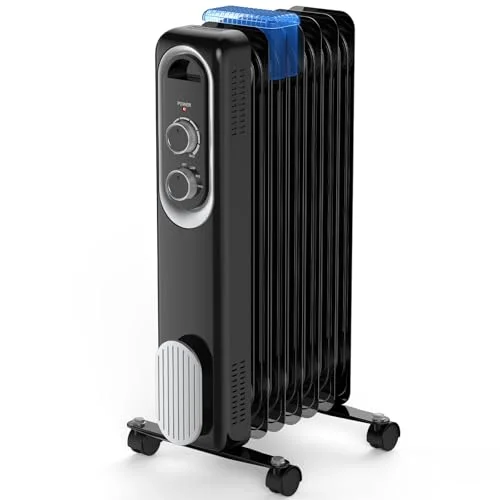
A laundry room or mudroom is usually the last room in the house to get heat, and often the one most likely to have a heater running for hours with nobody in it. That combination rewards low-risk over powerful. The Sweetcrispy Oil Filled Radiator ($52.22) is fan-free and built for exactly that: an adjustable thermostat that holds a set warmth without a fan stirring up lint, and no element glowing where stray fibers could reach it.
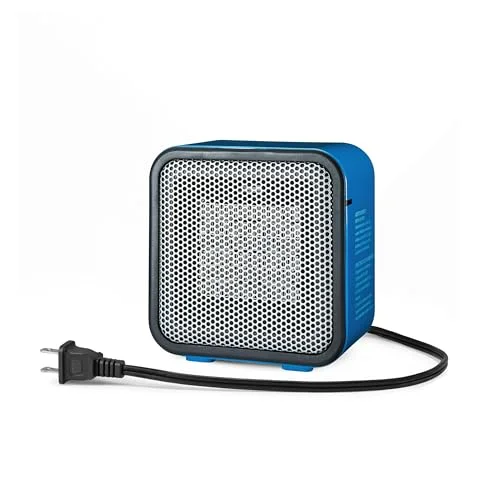
If the space is genuinely small and enclosed — a laundry closet, a narrow mudroom off a back door — the Amazon Basics Ceramic Space Heater ($18.89) is a 500-watt unit sized to that room, not a scaled-down version of a heater built for somewhere bigger. And if the room sits out of normal sight lines — off a garage, down a hall you don't pass through in winter — the SereneLife Smart Space Heater ($44.90) is Wi-Fi enabled, so you can check it, or shut it off, from your phone instead of walking out to look.
Why a laundry room or mudroom usually gets heat last
Every house has a pecking order for heat, and a laundry room or mudroom is almost never near the top of it. These are utility spaces by design: somewhere to drop boots and coats, somewhere the washer and dryer live, not somewhere anyone sits for long. Builders and renovators spend the insulation and finishing budget on the rooms people occupy, and a mudroom or laundry room is frequently the room that gets whatever's left — a single exterior wall with less insulation behind it, a door to an unheated garage, a concrete floor instead of a subfloor and carpet.
Central heating follows the same logic. A duct run to a utility room is often an afterthought, sized for "keep it from being unbearable" rather than "keep it comfortable," and a thermostat mounted in the living room has no idea that the mudroom twenty feet away, behind a closed door, is ten degrees colder. None of this is a malfunction. It's a room that was never designed to be warm in the first place — which is exactly the gap a plug-in heater is good at closing, because it adds heat exactly where the central system doesn't reach, rather than trying to out-argue the whole house's floor plan.
Keeping pipes from freezing without babysitting the heater
The stakes in a laundry room or mudroom are also different from a bedroom or office. These rooms often carry exposed plumbing — a washing machine's supply lines, sometimes a run feeding an exterior spigot — and they're more likely to sit over a crawlspace or share a wall with a garage, both colder than the rest of the house's foundation. When a laundry room drops toward freezing, it isn't just uncomfortable; it's the room where a pipe actually bursts.
The instinct is to leave a heater running continuously and not think about it again, but that's a worse plan than it sounds, for a room nobody is standing in to notice if something's wrong. A heater with a thermostat that cycles on and off to hold a set temperature is doing a different job than one running flat out around the clock: it's maintaining a floor, not blasting heat indefinitely. The SereneLife Smart Space Heater is built with a thermostat and a 12-hour timer, which means it's never silently running longer than you told it to without you checking in. Pair that with its Wi-Fi control, covered in detail below, and you get a heater you can set, then actually verify is still doing its job, rather than one you plug in and hope about.
None of this replaces the usual pipe-freezing basics — insulating exposed supply lines, disconnecting exterior hoses, leaving a cabinet door open under an exposed sink. A space heater is supplemental warmth for the room, not a substitute for insulating the pipe itself. What it can do is keep the room's ambient temperature well clear of freezing, so those other precautions aren't fighting a losing battle.
Oil-filled and fan-free: the lower-risk choice for a room nobody watches
A laundry room is, almost by definition, a room full of exactly the things a heater shouldn't be near: lint, loose fibers, drying fabric, dust kicked up by the dryer vent. A fan-driven heater pulls air across its heating element and pushes it back out, which in a bedroom or office is a non-issue and in a laundry room means pulling lint and dust through the one part of the appliance that gets hot. An oil-filled radiator sidesteps that mechanism entirely: there's no fan, no element exposed to airflow, nothing circulating room dust across a hot surface.
The Sweetcrispy Oil Filled Radiator Heater is a 1500W unit built around that principle, with an adjustable thermostat and quiet, noiseless operation by design rather than as an afterthought. It's sized at roughly 22.8 by 11.8 by 4.9 inches — a tall, slim profile meant to stand flush against a wall, which suits a narrow mudroom or a laundry room where floor space is already claimed by a washer and dryer. Because the heating element lives sealed inside the radiator body rather than sitting in an airstream, it's a heater you can leave running in a room you're not actively watching with meaningfully less to go wrong mechanically. It also keeps radiating warmth for a while after it switches off, which matters in a room you might only check on once or twice a day.
The trade-off is speed: oil-filled heat builds slowly compared with a fan-driven ceramic unit, so it's the wrong choice if you want the room warm in the two minutes you're standing in it folding laundry. For more on that category specifically, including how the slow-and-steady approach compares across other oil-filled models, see our roundup of the best oil-filled radiator heaters. And if you want to see where oil-filled sits against the faster-acting categories on actual warm-up time, we've broken down the heat-up claims by heater type elsewhere on the site.
A 500-watt heater for a genuinely small, enclosed space
Not every laundry room or mudroom is a room at all — plenty are a closet with bifold doors, or a narrow hallway niche barely wider than the washer and dryer sitting in it. A 1,500-watt heater built for a living room is overkill in a space that size, and it's also the heavier draw on a circuit that may already be carrying a washer, dryer or both. In a laundry closet specifically, a smaller heater isn't a compromise; it's the better-sized tool.
The Amazon Basics Ceramic Space Heater is a 500-watt unit — about a third of the draw of the other two heaters on this page — at 5.9 by 3.2 by 6 inches and 1.4 pounds, with tip-over protection built in. That's a footprint that fits on a shelf above a stacked washer-dryer or tucked beside a utility sink, not a cabinet that needs its own patch of floor. The lower wattage is the point, not a limitation: it's enough to take the edge off a small, enclosed space without adding meaningful load to a circuit that's already working for the laundry appliances on it.
Sizing the heater to the room rather than defaulting to the biggest available unit is the same logic we've covered for other small, enclosed spaces — our guide to space heaters for a college dorm room works through the same small-footprint, lower-wattage reasoning for a different kind of tight space. The electrical-safety side of a small enclosed room is also worth a look if you're nervous about running any heater in a closet: our piece on whether electric space heaters carry a carbon monoxide risk covers why this category, unlike a fuel-burning heater, doesn't carry that particular hazard, which matters more the smaller and more enclosed the room is.
Checking a Wi-Fi heater from your phone instead of walking out to the garage
A mudroom often sits between the living part of the house and somewhere colder and darker — the garage, a side entry, an unheated hallway you don't walk through for fun once the sun's down. If a heater's running back there, "just go check on it" is a real ask in January, not a casual one. A handheld remote doesn't solve that; it only works once you're standing in the room anyway.
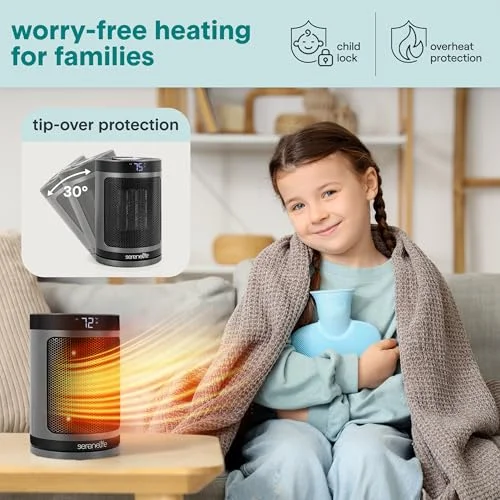
The SereneLife Smart Space Heater is built differently: it's a 1500W PTC ceramic heater with a thermostat, remote control and a 12-hour timer, and it's Wi-Fi enabled, which means its app control isn't limited to line of sight the way a remote is. You can check whether it's on, see what temperature it's holding, or switch it off entirely from your phone, from the kitchen or from across town, instead of putting on boots to go confirm it with your own eyes. For a mudroom that's effectively a halfway house between indoors and the cold, that's the difference between checking on the heater and having to go check on the heater.
Worth being precise about what that buys you: Wi-Fi control is a convenience layer for monitoring and scheduling, not a safety certification in itself. Treat it as a way to confirm the heater is doing what you set it to do, on top of whatever built-in protections the unit has — not a reason to skip the basic placement rules covered below just because you can see the app says it's on.
The picks
Three heaters, three different answers to the same brief — a room that's often small, often unwatched, and often colder than the rest of the house deserves to be.
01Best fan-free pick
Sweetcrispy Oil Filled Radiator Heater
Lower-risk heat for a room nobody's watching
Oil-filled, 1500W·Adjustable thermostat·Quiet, noiseless operation·22.8 × 11.8 × 4.9 in
No fan means no mechanism pulling laundry-room lint and dust across a hot element, which is the whole argument for an oil-filled radiator in this particular room. The adjustable thermostat cycles the unit to hold a set warmth rather than running flat out, and Sweetcrispy builds it for quiet, noiseless operation rather than treating that as an afterthought. At roughly 22.8 by 11.8 by 4.9 inches, it's a tall, slim profile that stands flush against a wall — useful in a laundry room where the washer and dryer have already claimed the floor space. It keeps radiating warmth for a while after it shuts off, which suits a room you check on occasionally rather than one you're sitting in.
The pick if the room has lint, drying fabric or a laundry pile anywhere near where a heater would go.
02Best for a small, enclosed space
Amazon Basics Ceramic Space Heater
A 500-watt heater sized to an actually small room
500W ceramic·Tip-over protection·1.4 lbs·5.9 × 3.2 × 6 in
A laundry closet or a narrow mudroom niche doesn't need — and often can't spare the circuit capacity for — a full 1,500-watt heater. At 500 watts and 1.4 pounds, this one draws about a third of the current of the other two picks here, which matters when the same circuit is already carrying a washer or dryer. It's small enough, at 5.9 by 3.2 by 6 inches, to sit on a shelf above stacked laundry machines or on a utility counter rather than taking up floor space, and it ships with tip-over protection built in.
The pick for a laundry closet or mud-nook, not a full room — it's sized for exactly that difference.
03Best for checking remotely
SereneLife Smart Space Heater
Wi-Fi control for a room out of normal sight lines
1500W PTC ceramic·Wi-Fi enabled·12-hour timer·Thermostat, remote
A mudroom off a garage or a cold back hallway is exactly the kind of room you don't want to make a special trip to check on. This heater pairs a 1500W PTC ceramic element with a thermostat, a handheld remote and a 12-hour timer, and — the feature that earns it this slot — Wi-Fi connectivity, so you can check its status or switch it off from your phone rather than walking out in the cold to confirm it with your own eyes. The 12-hour timer is also doing real work here: it caps how long the unit runs unattended before it needs a fresh look, rather than leaving it to run indefinitely.
The pick if the room is far enough from where you spend your evening that "go check" is actually a chore.
Pick the fan-free or small unit when
The room is genuinely tiny, shares a circuit with the washer and dryer, or has lint and drying fabric close enough to a heater that a fan pulling air across a hot element is the wrong mechanism for the space.
Pick the Wi-Fi unit when
The room sits apart from where you spend your evening — off a garage, down a cold hallway — and being able to confirm it's still doing its job without getting dressed for outside is worth more than any other single feature.
What never belongs near a running heater: a laundry pile or a drying rack
This is the one rule worth repeating for this specific room, because a laundry room or mudroom is stocked with exactly the things a heater placement guide usually only has to mention in passing. A pile of unwashed or unfolded laundry sitting on the floor, a drying rack strung with damp clothes, hanging coats or towels, a basket of dryer lint waiting to be emptied — all of it is combustible fabric, and all of it tends to accumulate in a laundry room specifically, in a way it doesn't in a bedroom or office.
The general safety guidance that applies to any space heater is worth restating here because this room makes it easy to ignore: keep a cleared radius around any running heater, point it away from fabric and furniture rather than toward it, never drape clothing over a heater to dry it faster, and never set a heater on an uneven surface like a laundry pile itself. A drying rack a few feet away feels harmless because nothing is touching the heater directly — but "a few feet" in a cramped mudroom is often the same few feet the manufacturer's clearance guidance is written for. Treat the room's usual clutter as the reason to be stricter about placement, not an exception to it.
Unplug the heater, rather than relying on a timer alone, if you're leaving the house for an extended period and nobody can check on it. A thermostat and shut-off timer, like the ones on the SereneLife and Sweetcrispy units above, reduce risk; they don't eliminate the value of a basic walk-through before you leave a utility room unattended for hours.
How we picked
We looked specifically for heaters that solve a laundry-room or mudroom problem rather than a generic living-room one: a fan-free design for a room full of lint and fabric, a genuinely low wattage for a space that's actually small, and remote monitoring for a room that sits apart from the rest of the house. That's why this page has three heaters with three different mechanisms rather than three similar towers in different colors — the room's specific risks and layout decided the category, not the other way around.
How we compared
We compared the three heaters on their published titles, listed specifications and current Amazon prices. Where a listing states a number — the Amazon Basics unit's 500 watts and 1.4-pound weight, the Sweetcrispy radiator's 1500W rating and dimensions, the SereneLife heater's 12-hour timer and Wi-Fi connectivity — we cite it directly. Where a spec isn't part of the listing data we have, we don't estimate one to fill the page.
We don't run a testing lab. We haven't placed these three heaters in a laundry room ourselves and timed how fast they warm it, so you won't find an invented decibel reading or a score out of ten here. We also don't show star ratings, review counts or paraphrased owner sentiment, because we don't have manufacturer-published figures for these specific listings — a limitation of the data available to us, not a judgment on the heaters themselves.
Frequently asked questions
Why is my laundry room or mudroom always the coldest room in the house?
Because it was built and insulated as a utility space, not a living space. These rooms typically sit against an exterior wall, next to or inside an unheated garage, or over a crawlspace, and they often get a smaller share of ducted heat and a smaller insulation budget than the rooms people actually spend time in. A plug-in heater is adding warmth the central system was never really sized to deliver there in the first place.
Can a space heater actually keep pipes from freezing in an unheated utility room?
It can help keep the room's ambient temperature clear of freezing, which is the goal, but it's supplemental heat, not a substitute for insulating exposed supply lines or disconnecting exterior hoses. A heater with a thermostat that cycles to hold a set temperature, rather than one left running flat out indefinitely, is the lower-risk way to maintain that floor in a room you're not watching constantly.
Is an oil-filled heater safer than a fan heater for a room I'm not standing in?
For a laundry room specifically, an oil-filled radiator has a real advantage: there's no fan pulling lint, dust or loose fibers across a hot heating element, because there's no fan at all. The heating element is sealed inside the radiator body. It's slower to warm the room than a fan-driven ceramic heater, which is the trade-off for that lower-risk design.
Can I leave a laundry pile or drying rack near a running space heater?
No. Keep a cleared space around any running heater and point it away from fabric, not toward it — never drape wet clothing over a heater to speed up drying, and don't set a heater down on top of laundry. A laundry room's usual clutter is exactly the kind of combustible material space heater clearance guidance is written around, so treat it as a reason to be more careful about placement, not less.
Written by Ilane Tall. Research-based comparisons of published specifications, current prices and public product data — we do not physically test these units and we do not publish invented scores.