By Ilane Tall · Updated October 19, 2026 · Research-based.
Reader-supported: we may earn a commission when you buy through the links on this page, at no additional cost to you. It never changes which product we recommend. Prices quoted below were correct at the time of writing and move often.
Quick answer
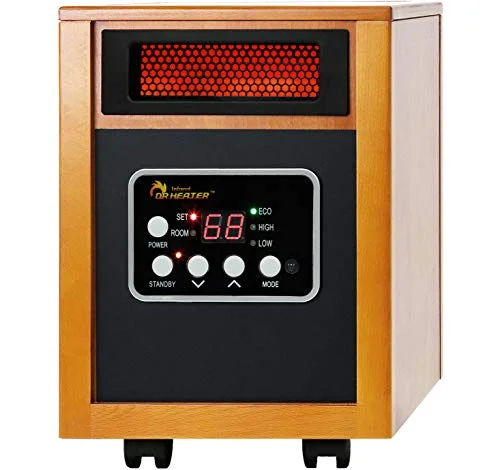
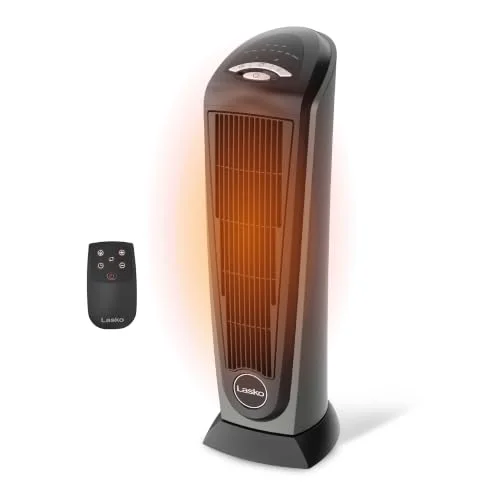
Every heater here carries an automatic shut-off, but the number behind it is not the same number. The Lasko 751320 ($71.99) is built around a 7-hour timer you start from the remote — enough for an evening on the couch, not enough for a full night's sleep. The Dr Infrared DR-968 ($104.99) states a 12-hour automatic shut-off, the longest stated interval of the three, which is what actually makes it an overnight heater rather than just a large-room one.
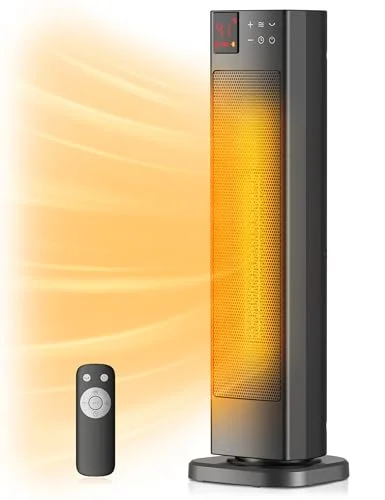
The PELONIS 23" Oscillating Tower ($74.99) sits in between: a digital control panel and remote built for precise, 1°F temperature adjustment, paired with its own 12-hour timer. See how the three compare, or jump straight to the picks.
Why automatic shut-off exists at all
A portable space heater is, functionally, a few hundred watts of exposed heating element sitting on your floor, drawing close to the maximum a household outlet can safely deliver. Unlike a furnace or a baseboard radiator wired into the house, nothing about a plug-in heater assumes a person is watching it. It can be knocked over by a pet, buried under a blanket that slid off a bed, or simply left running in a room everyone has walked out of. Automatic shut-off exists to put a hard limit on how long any of those situations can go on before the unit powers itself down.
That is a distinct job from the other safety features bundled into the same listings. Tip-over protection cuts power the instant the unit is knocked past a certain angle. Overheat protection cuts power if an internal sensor reads a temperature the housing shouldn't reach. A shut-off timer is the only one of the three that doesn't wait for something to go wrong — it ends the session on a clock, regardless of whether the heater is behaving perfectly. All three of the heaters in this guide carry overheat and tip-over protection in addition to their stated timer; the timer is the one spec that varies enough between them to be worth a dedicated comparison, and the one most buyers skim past on the way to price and wattage. For the fuller picture on leaving any of these running unattended, see are space heaters safe to leave on.
Fixed, preset or selectable: three different products
Not every "timer" on a space heater spec sheet means the same thing, and the three heaters we're comparing here are a useful spread because each one documents its shut-off a little differently.
The Dr Infrared DR-968 is the clearest case of a fixed interval. Its own listing states it plainly: a 12-hour automatic shut-off timer, paired with a 12.5-amp draw from its dual infrared-quartz-plus-PTC heating system. There's no mention of choosing a shorter duration — 12 hours is the number, and it's the one you get.
The Lasko 751320 reads as a preset you switch on rather than dial in. Lasko's own feature copy describes a remote that "handles heat settings, oscillation, and a timer," with "a 7-hour timer" that lets you "set it and forget it." That phrasing describes one documented duration, started with a button, not a menu of durations to pick between.
The PELONIS 23" Oscillating Tower is the one built around a genuinely more adjustable interface: a digital control panel plus remote, with the listing specifically calling out 1°F precision on the temperature setting, alongside what PELONIS describes as an "extra-long 12H timer." That digital panel is real evidence of finer control than a single on/off remote button — but the listing text only confirms the precision claim for temperature, not for the exact timer increments available. If being able to pick, say, a 4-hour versus an 8-hour shutoff matters to your decision, confirm the increments on the current listing before buying rather than assuming the digital panel covers it; see reading the specification before you buy below for why that gap matters.
The underlying heat delivery differs too: the Lasko and the PELONIS are both ceramic fan heaters, while the Dr Infrared pairs an infrared quartz element with PTC ceramic in one cabinet. If the mechanism itself — not just the timer — is the deciding factor for you, ceramic, infrared or oil-filled breaks that choice down on its own.
Seven hours is an evening, not a night
Run the Lasko's 7-hour timer against an actual schedule and the gap becomes obvious fast. Start it at 7pm while you're on the couch and it shuts off at 2am — fine, if you're also awake and heading to bed around then. Start it at 10pm, intending it to carry you through a full night's sleep, and it cuts out at 5am, hours before most people are up, in the coldest stretch of the night.
The Dr Infrared's stated 12-hour shut-off covers that same 10pm start with room to spare, running past 10am the next morning. That five-hour difference between the two listed numbers is the entire reason one heater suits a room you sit in for a few hours and the other suits a room you sleep in. It isn't about which heater is "better" in the abstract — a 7-hour preset is perfectly sized for a home office you leave at 5pm, or an evening in front of the television. It's a mismatch only when the use case is sleep and the number on the box is built for being awake. For heaters specifically picked with an eight-hour night in mind, see the best space heaters for a bedroom.
The PELONIS's 12-hour figure puts it in the same overnight-capable bracket as the Dr Infrared on paper, though as covered above, we don't have confirmation that its digital panel lets you shorten that interval if you only wanted, say, four hours while reading before bed. Treat the 12-hour number as the ceiling it's documented to reach, not a guarantee of flexibility below it.
Thermostat cycling is not the same as a timer
It's easy to conflate two specs that sit right next to each other on a heater's control panel and do genuinely different jobs. A thermostat's job is temperature: it reads the room, and when the air reaches the setpoint, it cycles the heating element off, then back on again once the room cools a degree or two, repeating that loop for as long as the heater has power. A shut-off timer's job is duration: regardless of what the thermostat is doing, it powers the entire unit down for good once a set number of hours has passed.
A heater can cycle its thermostat dozens of times in an evening and never trip its shut-off timer at all — the two systems are independent, and a heater that holds a room at 68°F all night on thermostat cycling will still go dark the instant its 7- or 12-hour timer runs out, setpoint or no setpoint. The PELONIS listing illustrates the split well: its 1°F-precision digital control is a thermostat-side spec, aimed at how tightly it holds a target temperature, while its "extra-long 12H timer" is the separate, duration-side spec covered above. Buying on one number without checking the other is how someone ends up with a heater that holds a room beautifully for six hours and then shuts off entirely at hour seven, regardless of how cold it's gotten since.
Thermostat cycling also changes how much the heater actually draws over a night, since it isn't running at full output the entire time it's plugged in — a detail that matters more to your electric bill than to the shut-off question, and one we break down with the actual arithmetic in what a space heater actually costs to run.
Reading the specification before you buy
Across these three listings, the words manufacturers use to describe the same basic feature vary more than you'd expect, and that variation is exactly where buyers get surprised after the box arrives. "12-Hour automatic shut-off timer" (Dr Infrared) is an explicit, single, checkable claim. "A 7-hour timer lets you set it and forget it" (Lasko) is almost as explicit, worded around convenience rather than the number itself, but the number is still there. "Extra-long 12H timer" (PELONIS) states a ceiling without confirming whether it's the only option or one of several.
None of those three phrasings is dishonest. They're simply different levels of detail, written by three different brands for three different product pages, and the only way to know which one you're actually getting is to read past the headline wattage and price to the specific sentence describing the shut-off. A few things worth scanning for specifically: whether the listing states a single number or a range, whether "timer" and "thermostat" appear as separate bullet points or are blurred into one, and whether the control method (dial, single remote button, or digital panel) matches the level of adjustability being implied. When a listing doesn't spell out an increment or a range, the honest assumption is that it doesn't offer one — not that it probably does and simply forgot to mention it. If a specific number genuinely matters to your situation, the current Amazon listing and its Q&A section are the authority, not a marketing photo of a remote control.
The picks
Three heaters, three different answers to how long they stay on before shutting themselves off — not a ranked list, since the right one depends on whether you're furnishing a desk for a few hours, a living room for an evening, or a bedroom for the night.
01Best for overnight
Dr Infrared Heater DR-968
The longest stated shut-off of the three: a fixed 12 hours
Infrared quartz + PTC·12-hour shut-off·12.5 amps·Cherry cabinet
Its own listing states the number outright: a 12-hour automatic shut-off, paired with tip-over and overheat protection and a dual infrared-quartz-plus-PTC heating system. That single figure is what separates it from the other two picks here — it's the only one of the three documented to run past a full eight-hour night without needing a restart. It's a cabinet rather than a slim tower, so it takes real floor space, and at a stated 12.5 amps it wants an outlet it isn't sharing with another appliance.
The pick if the room needs heat for a full night, not just an evening, and you'd rather have one documented number than guess at an unstated range.
02Best for an evening
Lasko 751320 23" Ceramic Tower
The preset pick: one remote button, a 7-hour window
Ceramic, oscillating·7-hour timer·ETL listed·Remote control
A self-regulating ceramic element with wide oscillation, cool-touch housing and overheat protection, controlled by a remote that Lasko's own copy says "handles heat settings, oscillation, and a timer." The 7-hour timer is described as a "set it and forget it" feature — one documented duration you switch on, rather than a range you dial through. That's plenty for a few hours on the couch or a home-office afternoon; it will end well before a night's sleep is over if you start it at bedtime rather than earlier in the evening.
The pick for a room you're in for a few hours, not a room you're asleep in — match the 7-hour window to when you'll actually be there.
03Best digital control
PELONIS 23" Oscillating Ceramic Tower
The precision pick: a digital panel built for fine adjustment
Ceramic, 75° oscillation·12H timer·1°F precision·Digital panel + remote
A one-touch digital panel plus remote, with PELONIS specifically calling out 1°F precision on the temperature setting — genuinely finer control than a single-button remote offers. It pairs that with what the listing calls an "extra-long 12H timer," matching the Dr Infrared's overnight-length ceiling on paper. What the listing doesn't spell out is whether that 12 hours is adjustable in smaller steps; we're not going to claim an increment the manufacturer hasn't published, so if that flexibility matters to you, check the current listing before buying.
The pick if you want the most adjustable-feeling control panel of the three, with the honest caveat that "adjustable" is confirmed for temperature, not explicitly for the timer.
If none of the three fits your budget, the best space heaters under $50 covers what's checkable further down the price range, including which listings still state a real shut-off number at that price.
How we picked
We started from our own database of space heaters listed for sale in the US and looked specifically for three products that describe their automatic shut-off in genuinely different ways — a single fixed figure, a remote-started preset, and a digital panel built around finer adjustment — rather than three near-identical towers that differ mainly in color. The goal wasn't to crown a single "best" timer, since the right duration depends entirely on how long you'll actually be in the room.
How we compared
We compared the three heaters on their published titles, listed features and current Amazon prices. Where a listing states a specific figure — the Dr Infrared's 12-hour shut-off and 12.5-amp draw, the Lasko's 7-hour timer, the PELONIS's 1°F temperature precision and 12-hour timer — it's quoted directly from the product's own listing. Where a listing doesn't confirm a detail, such as whether the PELONIS's timer offers selectable increments below 12 hours, we say so rather than estimate one to fill a gap.
We do not run a testing lab. We do not own these three heaters and have not run their timers against a stopwatch ourselves, so you will not find an invented decibel reading or a score out of ten anywhere on this page. We also don't show star ratings, review counts or paraphrased owner sentiment, because we don't have manufacturer-published figures for these specific listings — a limitation of the data available to us, not a judgment on the heaters themselves.
Frequently asked questions
Why do space heaters have an automatic shut-off timer at all?
Because a portable heater draws close to the maximum a household outlet can deliver, and nothing about a plug-in unit assumes a person is watching it the entire time it runs. An automatic shut-off puts a hard limit on how long it can keep running unattended, separate from tip-over and overheat protection, which react to something going wrong rather than simply ending the session on a clock.
What's the difference between a shut-off timer and a thermostat?
A thermostat cycles the heating element on and off to hold a set room temperature, and can do that for as long as the unit has power. A shut-off timer powers the entire heater down after a fixed number of hours, regardless of what the thermostat is doing or how cold the room has gotten since. A heater can cycle its thermostat all night and still go dark the moment its timer runs out.
Is a 7-hour timer long enough to leave a heater on overnight?
It depends entirely on when you start it. Beginning at 7pm, a 7-hour timer covers you to 2am; beginning at 10pm intending to sleep through the night, it shuts off around 5am, hours before most people wake up. The Lasko 751320's 7-hour timer suits an evening more reliably than a full night; the Dr Infrared DR-968's stated 12-hour shut-off has the margin to cover a complete night's sleep starting at a normal bedtime.
How can I tell if a heater's timer is fixed or adjustable before I buy it?
Read the specific sentence describing the shut-off, not just the headline number. A listing that states one duration and describes starting it with a single button, like the Lasko's "set it and forget it" 7-hour timer, is almost certainly fixed. A listing built around a digital panel, like the PELONIS, suggests finer control is possible, but unless the listing explicitly states selectable increments, don't assume it offers them — confirm on the current listing or its Q&A section before buying on that assumption.
Written by Ilane Tall. Research-based comparisons of published specifications, current prices and public product data — we do not physically test these units and we do not publish invented scores.