By Ilane Tall · Updated November 7, 2026 · Research-based.
Reader-supported: we may earn a commission when you buy through the links on this page, at no additional cost to you. It never changes which product we recommend. Prices quoted below were correct at the time of writing and move often.
Quick answer
Yes, with conditions that matter more than the heater you pick. A plug-in space heater is reasonably safe in a bathroom when the outlet is GFCI-protected, the heater sits well outside the splash zone around the tub, shower and sink, and it is turned off — ideally unplugged — before anyone starts running water. Skip any one of those three and the heater itself becomes almost beside the point.
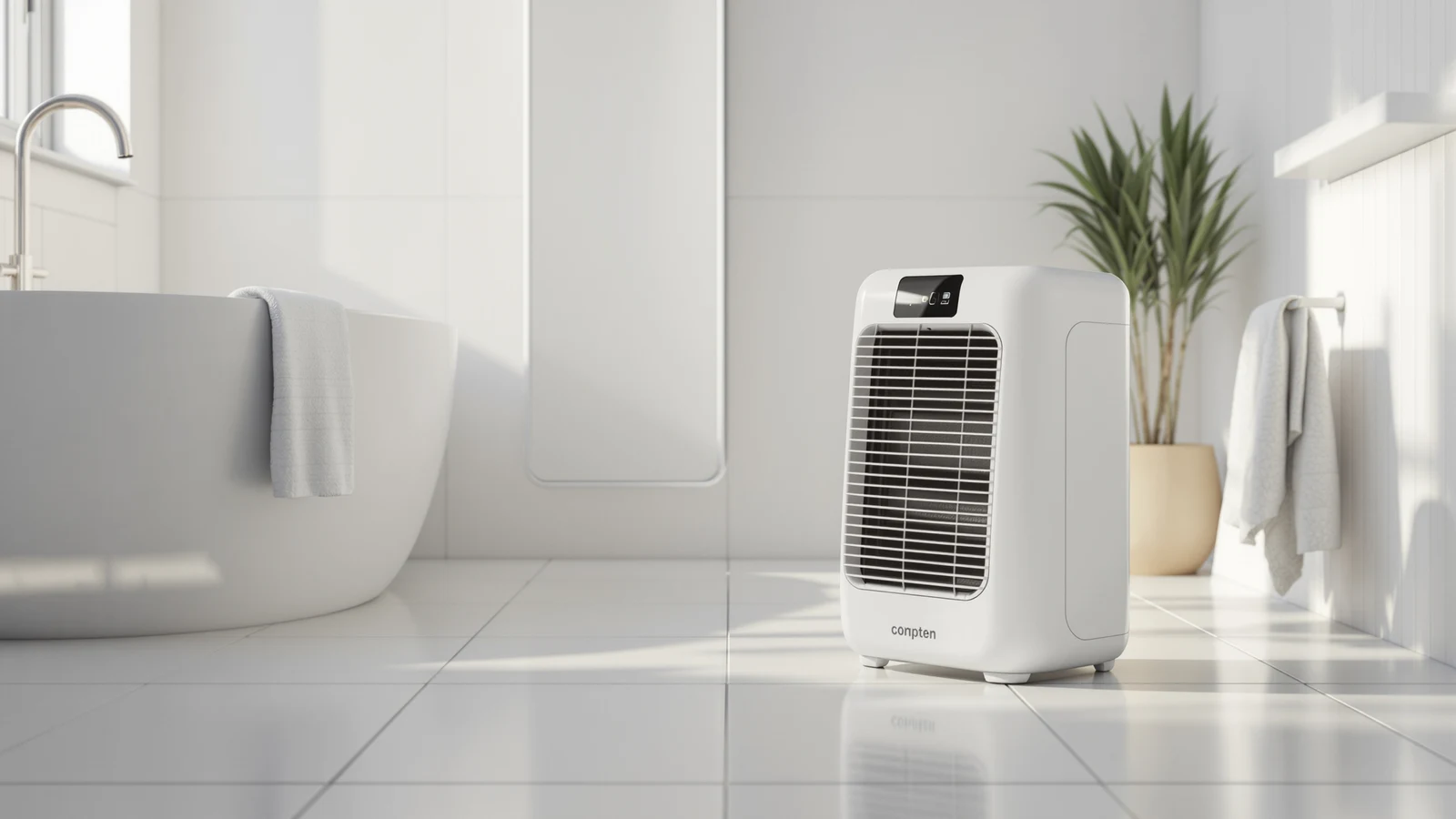
None of this is a job for a large heater. A bathroom is small, usually closed off by a door, and the honest goal is taking the chill off tile and air for ten minutes, not heating a living room. Three small-footprint heaters sized for that job are below, after the placement rules that decide whether any heater belongs in there at all.
Why water and a space heater are a GFCI question, not a vibe
Most of what people say about bathroom heaters is instinct dressed up as a rule — "keep it away from the tub," "don't let the cord get wet," general caution that sounds right but doesn't actually explain what makes the difference between a safe setup and a dangerous one. The real answer is more specific, and it already exists in the electrical code governing every bathroom in the country: a ground fault circuit interrupter, or GFCI, on the outlet itself.
A GFCI outlet continuously compares the current flowing out to a device against the current flowing back. The instant those two numbers stop matching — which is exactly what happens when current starts leaking somewhere it shouldn't, say through a frayed cord lying in a damp spot, or through a person's body if a live part gets touched while standing on a wet floor — the outlet cuts power in a fraction of a second, long before that leak becomes a lethal shock. That is a fundamentally different kind of protection than a heater's own tip-over switch or overheat cutoff, which exist to stop a fire, not a shock. A bathroom needs both kinds of protection, but only one of them, the GFCI, is doing the job that matters once water and electricity are sharing the same small room.
The National Electrical Code has required GFCI protection on bathroom receptacles for decades, specifically because bathrooms combine grounded metal fixtures, bare skin, and standing water more than almost any other room. That requirement was written with hair dryers and curling irons in mind, not space heaters, but the physics doesn't care what the appliance is. A 1,500-watt heater plugged into a GFCI-protected outlet is sitting behind the same protection a hair dryer gets. The same heater plugged into an ungrounded, non-GFCI outlet in an older home's bathroom is not protected at all, regardless of how good the heater itself is.
So the first real question isn't which heater to buy. It's whether the outlet you're about to use has a GFCI built in — most have a visible "test" and "reset" button right on the faceplate — or whether it's on a GFCI-protected circuit further back at the panel. If you genuinely don't know, a plug-in GFCI adapter at the outlet itself is a reasonable stopgap, and testing the button periodically is worth doing the way you'd test a smoke detector: it is a safety device, and safety devices that have never been tested are an assumption, not a fact.
The outlet matters more than the heater
Once the outlet is confirmed GFCI-protected, the second thing that matters is one most buyers skip past entirely: what else that outlet, and the circuit behind it, is actually built to carry. Nearly every plug-in space heater sold for a US wall outlet, including small bathroom-sized units like the three covered below, is built to roughly 1,500 watts unless its own listing states a lower figure — that works out to about 12.5 amps on a standard 120-volt circuit, close to the working limit of a 15-amp breaker on its own. None of the three listings here states a specific wattage figure, so we're treating 1,500 watts as the reasonable working assumption for this category rather than inventing a number, and the practical guidance below holds either way.
A bathroom outlet is frequently a single outlet serving the whole room, sometimes shared with a wall-mounted light fixture or an exhaust fan on the same circuit. That's generally fine for a heater on its own. What turns it into a problem is stacking a second high-draw appliance on the same outlet or a nearby power strip — a hair dryer, in particular, since bathrooms are where hair dryers live, and a hair dryer at 1,200 to 1,875 watts plus a 1,500-watt heater running at the same time can push a shared 15-amp circuit well past its rating. The fix isn't a smaller heater; it's not running both appliances from the same outlet at once.
The cord matters as much as the outlet. Every major heater manufacturer's own safety instructions say the same thing: plug directly into a wall outlet, never into an extension cord or a power strip. That instruction isn't boilerplate caution written to cover a brand legally — a space heater's near-continuous current draw needs a cord gauge most household extension cords aren't built for, and in a bathroom specifically, an extra length of cord is one more thing that can end up draped across a wet floor or close enough to a sink to matter. If the only outlet in the room is inconveniently placed, that's a case for a licensed electrician adding a properly rated, GFCI-protected outlet where you actually need one, not a cord bridging the gap. Renters facing the same inconvenient-outlet problem have the added wrinkle of not being able to add one at all, which makes placement, covered next, do more of the work.
Distance from the tub, the sink and the spray zone
The electrical code itself draws a useful map here, even though it wasn't written with heaters in mind. The NEC does not allow a standard receptacle to be installed within or directly over a bathtub or shower space — that zone is treated as wet-location territory where even permanently wired outlets aren't welcome. If code won't let a hard-wired outlet sit there, a portable heater sitting on the floor beneath it, or close enough that spray can reach it, is working against the same logic the code exists to enforce.
In practice, that means thinking about three separate wet zones rather than one vague "away from water" instruction: the tub or shower itself, including the arc a curtain or door swings through and the area a person dripping wet steps into when they get out; the sink, which splashes more than people expect once a faucet is running at any real pressure; and the general spray radius of a shower with the door or curtain open, which can carry mist several feet beyond the enclosure in a small room. A heater belongs outside all three, on the dry side of the room, not in the gap between them.
The floor underneath the heater matters as much as the horizontal distance. A bath mat positioned to catch drips from someone stepping out of the tub is, by definition, a spot that gets wet — which makes it one of the worst places to set a heater down even if it looks like a reasonable few feet from the tub on a floor plan. The safer habit is a fixed spot: the same dry corner, ideally near the door or on the side of the room farthest from any fixture, every time, rather than wherever there happens to be floor space that evening. A fixed spot also keeps the cord from needing to cross the room, which is its own small win against tripping hazards and wet-floor contact.
A bathroom is one of the few rooms in a house where "bigger heater, more heat" is actively the wrong instinct, for reasons that have nothing to do with the GFCI or placement rules above. Bathrooms are small by design, usually under 100 square feet, with a door that closes and holds heat in rather than letting it escape the way an open living room does. The wattage ceiling that limits every plug-in heater on a standard outlet — roughly 1,500 watts, covered above — is already more output than a sealed, closet-sized room needs to feel noticeably warmer within a few minutes.
What a bathroom actually needs from a heater is a small enough footprint to sit in that one dry corner without eating the floor space you need to dry off, step past, or open a cabinet door around. That's the opposite of the calculation that drives a heater for a bigger room, where wattage and square footage are the first things to check — here, physical size and the stability of the base matter more than output. The three heaters below are all built around that logic: the "Size/variant" each one is sold in — small, Small, and a 10-inch model — describes a unit meant to sit on a counter edge or a patch of dry floor, not fill a room.
A small footprint also does double duty on the placement rules above. A compact base is easier to tuck fully into the one safe zone a small bathroom actually has, rather than one that overhangs toward the tub or the sink because there was nowhere else to put it. The comparison between a tower heater's floor print and a compact cube's is exactly the question worth asking before buying one for a bathroom specifically: a tower built to throw air across a large room is solving a problem a bathroom doesn't have, and it takes up more of the one safe corner doing it.
The picks
Three small-footprint heaters, in the sizes their own listings describe, all built for the same job: warming a small enclosed room without needing much floor space to do it. None of them state a certification, wattage, or IP rating beyond what's in their listing titles, so treat the notes below as exactly that — what's confirmed, and what isn't.
01Best overall for a bathroom corner
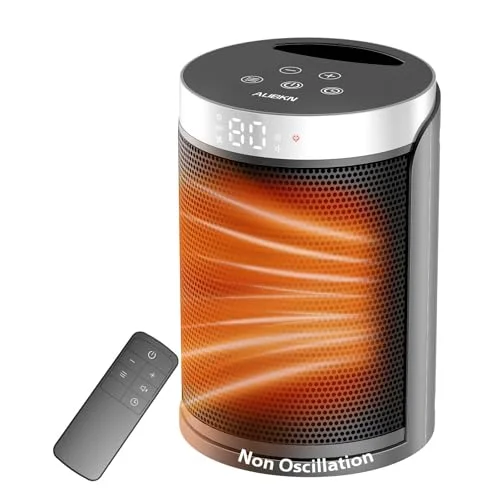
AUBKN Space Heater
Portable, indoor use, with remote — small size variant
Small·Remote included·Portable·Indoor use
A small-size portable heater that ships with a remote, which is a genuinely useful feature in a bathroom specifically: it lets you adjust or shut the heater off from the doorway, without reaching across a wet counter or over the tub to reach the unit itself. Its listing is sold in a small size variant, which fits the one-dry-corner placement this room calls for better than a larger cabinet would. We don't have a stated wattage or IP rating for this listing, so treat it, like any plug-in heater here, as not water-resistant and plan placement accordingly.
The pick if you want to control the heater without walking back into the splash zone to do it.
02Simplest control, smallest footprint
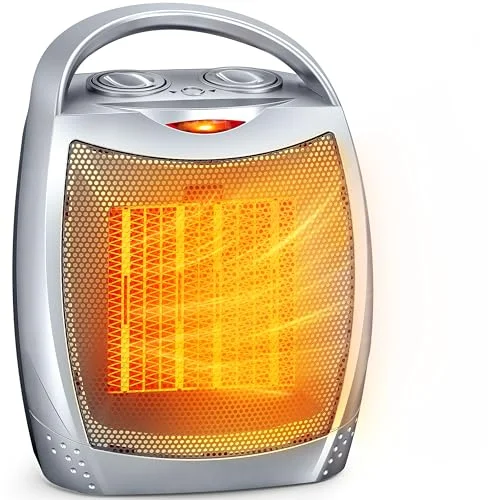
GiveBest Space Heater
Portable, indoor use — small size variant, no remote
Small·Portable·Indoor use·No remote stated
A small-size portable heater without a remote in its listing, which means every control is on the unit itself. That's a reasonable trade for the lowest price of the three: the controls being on the heater only matters if the heater is placed somewhere you'd rather not reach, which is exactly why the dry-corner placement covered above does the real work here. At this size, it fits on a dry patch of floor or a counter edge without crowding the room, and like the other two picks, we're not going to claim a wattage or certification its own listing doesn't state.
A straightforward small heater for anyone who'd rather bend down to a dial than reach for a remote.
03Best with a remote, slightly larger
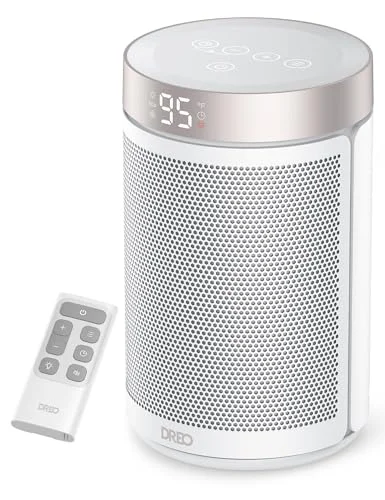
DREO Space Heater
Portable, indoor use, with remote — 10-inch size variant
10 inch·Remote included·Portable·Indoor use
DREO's listing puts this one in a 10-inch size variant, a step up from the two small units above while still well within the footprint a bathroom corner can take. It ships with a remote, the same doorway-distance advantage covered for the AUBKN pick, and the extra size may suit a larger bathroom or one shared between two people getting ready at once. If you're already considering a different DREO model for another room, our comparison of DREO's lineup covers how its sizes and price points differ beyond this one listing.
The pick if the bathroom is a touch bigger, or you specifically want remote control at this size.
For a bathroom this small, none of the usual "bigger room, bigger heater" math applies — if you're weighing this against a heater meant for a different, larger space, our picks for RVs and other tiny rooms run through the same small-footprint logic in a different setting.
The one bathroom habit no heater fixes: turning it off before you shower
Every rule above — the GFCI outlet, the dry corner, the small footprint — is about setting the heater up safely while it's off or idling. None of it changes what happens once water actually starts moving through the room. A plug-in space heater is not a sealed, waterproof appliance; nothing in any of the three listings above states an IP rating or any claim of water resistance, and in the absence of that claim, the safe assumption is that it has none. Running one while a shower is filling the room with steam, or while a bath is splashing nearby, is asking an appliance that was never rated for that environment to perform in it anyway.
The fix costs nothing and takes five seconds: turn the heater off, and unplug it if it's within reach of the shower or tub, before you turn the water on. Switch it back on once you're out and dry, after the heaviest steam has cleared rather than the moment you step out dripping.
This is the step that gets skipped most often, precisely because it's inconvenient in exactly the moment you want the heater most — the minute before stepping into a hot shower on a cold morning is also the minute the room is about to fill with the most moisture it will see all day. Building it into the same routine as locking the door or starting the water, rather than treating it as an extra step to remember separately, is the only version of this habit that actually sticks. A heater placed correctly and left running through a shower has undone most of the GFCI and placement planning covered above in the one window where it mattered most.
How we picked
We started from our own database of space heaters listed for sale in the US and looked specifically for small, compact units marketed for portable, indoor use rather than large-room heaters repurposed for a small space. All three picks here are sold in small or compact size variants with that listed directly in the product data, which is the one spec that actually matters for a room this size.
How we compared
We compared these three heaters on their published titles, available specifications and current Amazon prices. Where a listing states a feature directly — a remote, a size variant — we report it as stated. Where a listing doesn't include a wattage, certification or water-resistance rating, as is the case for all three here, we say so plainly rather than estimate a number to fill the gap. The electrical-code and GFCI guidance above reflects general, published US residential wiring conventions, not a claim specific to any one of these three products.
We do not run a testing lab. We do not own these three heaters and have not run them in a live bathroom ourselves, so you will not find an invented decibel reading, a certification we couldn't verify, or a score out of ten anywhere on this page. We also don't show star ratings, review counts or paraphrased owner sentiment, because we don't have manufacturer-published figures for these specific listings — a limitation of the data available to us, not a judgment on the heaters themselves.
Frequently asked questions
Do I need a GFCI outlet to run a space heater in a bathroom?
Yes, or as close to it as your home allows. The National Electrical Code has required GFCI protection on bathroom receptacles for decades specifically because bathrooms combine water, bare skin and electrical fixtures more than other rooms. A GFCI cuts power within a fraction of a second if current starts leaking somewhere it shouldn't, which is a different and more important kind of protection than a heater's own tip-over or overheat switch.
How far should a space heater be from a bathtub or shower?
Far enough that it sits outside the tub or shower's splash and spray zone entirely, including the arc a curtain or door swings through, on a part of the floor that stays dry even when someone steps out dripping. The electrical code itself doesn't allow a standard outlet to be installed within or directly over a tub or shower space, which is a useful proxy for where a portable heater shouldn't sit either.
Can I leave a space heater running while I shower?
No. None of the heaters covered on this page, or most plug-in space heaters generally, are built or rated to handle direct contact with water or sustained steam. Turn the heater off, and unplug it if it's near the shower or tub, before running the water, then switch it back on once the room has dried out and the heaviest steam has cleared.
Does a small space heater actually warm a bathroom well enough?
Usually yes, because a bathroom is small and typically closed off by a door, so even a compact unit at roughly 1,500 watts or less raises the temperature of that enclosed air faster than the same heater would in a larger, open room. The goal in a bathroom is taking the chill off for a few minutes, not sustained whole-room heating, which is exactly what a small-footprint heater is built for.
Written by Ilane Tall. Research-based comparisons of published specifications, current prices and public product data — we do not physically test these units and we do not publish invented scores.