By Ilane Tall · Updated October 23, 2026 · Research-based.
Reader-supported: we may earn a commission when you buy through the links on this page, at no additional cost to you. It never changes which product we recommend. Prices quoted below were correct at the time of writing and move often.
Quick answer
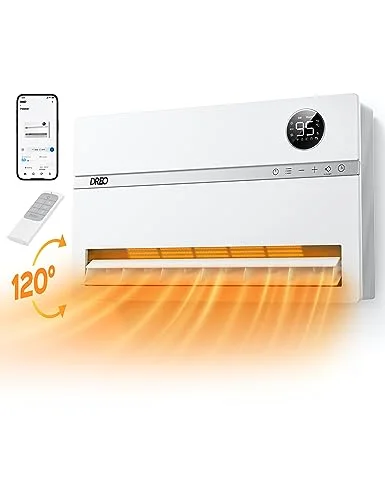
When there's no floor to spare, the choice isn't ceramic versus infrared — it's where the heater actually sits. The DREO Smart Wall Heater ($129.99) takes the floor out of the equation entirely by mounting to the wall, which is the right call for a small bathroom or a nursery where a cord and a warm cabinet at toddler height are both a problem.
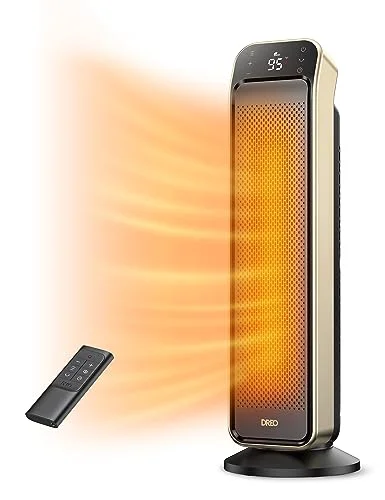
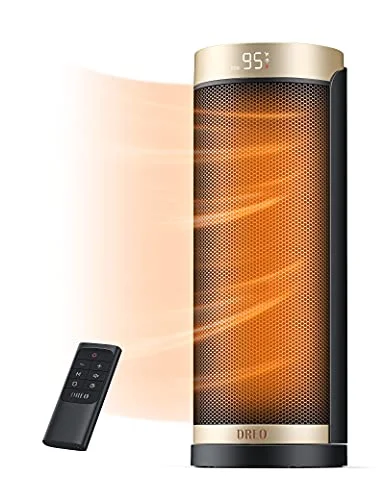
If mounting hardware and an installation step aren't what you want, the DREO 25 Inch tower ($89.99) gets most of the same benefit from a footprint you could cover with a dinner plate — tall rather than wide, standing in a corner instead of across a doorway. The DREO 16 Inch ($67.46) is the smallest and cheapest of the three, a sensible pick when even a 25-inch tower feels like too much heater for the space.
When floor space is the constraint
Most space-heater advice assumes you have a corner to spare: a living room, a den, a home office with room under the desk. That assumption breaks down fast in a handful of specific rooms. A small bathroom has a door that swings inward, a bath mat, and barely enough clear tile for the heater itself, let alone a cord running to the nearest outlet. A nursery has a crib, a glider and a changing table already competing for wall space, plus a toddler who will eventually be mobile and curious about anything warm sitting at knee height. A narrow hallway is, by definition, a path people walk through — not a room they sit in — so anything left on the floor is something somebody's foot will eventually find.
In all three cases, the usual heater shopping questions — ceramic or infrared, how many square feet, how loud the fan is — matter less than a more basic one: where does this thing physically go that isn't underfoot? That's the question this guide answers. We're not ranking these three heaters against the rest of our lineup on raw heat output; we're looking at them specifically through the lens of floor space, because that's the constraint that rules out most of the category before price or features even enter the conversation.
The honest starting point is that a wall-mounted heater and a tall tower solve this differently, not identically. One removes the floor from the equation. The other shrinks what it takes up on the floor without eliminating it. Which one is right depends on whether you can commit to a fixed mounting spot or need something you can move, unplug and store — a distinction the next two sections cover in detail.
Wall-mounted: what the installation actually involves
The DREO Smart Wall Heater is built to be fixed to a wall rather than stood on the floor, and that's the whole point of it in a space-constrained room — once it's up, it occupies zero floor area and nothing to trip over. What we can confirm from the listing is what it is: a 1,500-watt indoor space heater, sold in a white "Standard" size, marketed specifically for bedroom use. What the listing doesn't give us is a parts diagram, so we're not going to describe a specific bracket, screw count or stud-spacing requirement we haven't verified — check the current listing and included instructions for exact mounting hardware before you buy, especially if you're mounting into tile or plaster rather than drywall over studs.
What we can say with confidence, because it's true of this wattage class generally, is the electrical side of the picture. At 1,500 watts, a wall-mounted plug-in heater like this one draws the same roughly 12.5 amps as any other 1,500-watt space heater on a standard 120-volt US circuit. "Wall-mounted" describes where the unit physically sits, not how it gets power — unless a listing explicitly says a model is hardwired to a dedicated 240-volt circuit (a different, more involved job usually requiring an electrician), treat a wall heater like this one as a plug-in appliance that still needs a nearby outlet and a circuit it isn't sharing with anything else running at the same time. That matters doubly in a bathroom, where the circuit math behind a tripped breaker is the same whether the heater sits on the floor or on the wall.
The other installation question worth settling before you buy is height and clearance. A wall-mounted unit is fixed in place once it's up, so there's no "try it here first, move it later" the way there is with a tower you can just pick up. Decide on placement — distance from the shower or tub, distance from towels and curtains, height relative to who's in the room — before you drill anything, because moving a mounted heater is a repair job, not an adjustment.
A tall footprint versus a wide one
If mounting hardware isn't something you want to deal with, both remaining picks solve the floor-space problem the other way: by standing up rather than spreading out. The DREO 25 Inch Electric Space Heater is the taller of the two, sold in a "Large" size variant and built with a thermostat for indoor, large-room use. The DREO 16 Inch is roughly a third shorter, the compact end of the same tower format, at $67.46.
The trade a tower makes is straightforward: height buys floor clearance. A 25-inch tower and a 16-inch tower both occupy a small, roughly circular base you could cover with a dinner plate — nothing close to the rectangle of floor a cabinet-style heater or a wide console model needs. That's what makes either one workable in a corner of a bathroom or tucked beside a dresser in a nursery, where the first article in this series, our large-room roundup, found that a wide console-style unit simply won't fit.
The taller tower (25 Inch, Large)
More height means more of the room's air column the unit can move past its heating element before it exits the top, which is the usual argument for a taller tower in a bigger room. It also means a higher center of gravity, so a stable, wide-enough base and a hard, level floor matter more than they do on a shorter unit.
The shorter tower (16 Inch)
Less height for less unit overall — a smaller profile that's easier to tuck beside furniture and less heater than most people need for one small room. The trade is reach: a shorter column of warmed air moving past a shorter heating element doesn't push heat as far across a room as the 25-inch model is built to.
Neither listing we have states an exact base diameter or a tip-over rating in inches, so we won't invent one here — if the stability spec for a specific model matters to your household, particularly with kids or pets in the room, check the current listing or the printed manual before you buy. What we can say generally is true of every tower heater, not just these two: a taller, top-heavy shape is more sensitive to an uneven or carpeted floor than a short, squat one, which is one more reason both of these ship with the tip-over shut-off that's now standard across the category.
Keeping a heater out of reach
Floor space and reach are related but not the same problem. A heater can take up very little floor area and still be exactly at the height a toddler or a curious pet can get a hand or a paw on it. This is where the wall-mounted pick pulls ahead of both towers for a nursery specifically: mounted high enough on the wall, the DREO Smart Wall Heater and its cord are placed above where a crawling or newly walking child can reach, which a floor-standing tower — even a tall, narrow one — cannot fully replicate, since the base and the lower few inches of any tower sit exactly at a toddler's eye and hand level.
A tower heater isn't a poor choice for a child's room by default; it just asks for more active placement. Push it into a corner the crib or play area doesn't reach, keep the cord run short and tucked rather than crossing open floor, and treat the unit the way you'd treat any appliance with a heating element — not within arm's reach of where a child plays unsupervised. The same logic extends to pets: a curious cat investigating a warm tower is a more realistic household risk than most buyers plan for, and it's part of why leaving any space heater running unattended comes with caveats regardless of which of these three you choose.
Automatic shut-off timers are the other half of "out of reach" — not physical distance, but limiting how long a heater can run if nobody's actively watching it. None of the three listings here states a specific shut-off interval, so we're treating that as a gap in the data rather than guessing a number; if an automatic timer is a requirement for your household, verify the current listing or read our full breakdown of how shut-off timers vary by model before you commit to one of these three.
The picks
Three different answers to the same floor-space problem, not a ranked list — the right one depends on whether you can commit to a fixed mounting spot or need something portable, and how much room you actually have to spare.
01Best for zero floor footprint
DREO Smart Wall Heater
The wall-mounted pick: no floor space used at all
1,500 Watt·Wall-mounted·White, Standard·Marketed for bedroom use
The only one of the three that takes the floor out of the equation entirely. Fixed to the wall, it leaves no cabinet to walk around, no cord stretched across a doorway and nothing sitting at ankle height in a small bathroom. DREO markets it for bedroom use and it's sold in a white "Standard" size; at 1,500 watts, it draws the same roughly 12.5 amps as any plug-in heater in this class, so it still wants a wall outlet on its own circuit rather than a hardwired 240-volt connection — confirm exact mounting hardware against the listing before you commit to a wall and a height.
The pick if you can commit to one fixed spot and want the floor back permanently.
02Best tall tower
DREO 25 Inch Electric Space Heater
The tall-footprint pick: height instead of width, with no installation step
25-inch tower·Thermostat·Large, size variant·No mounting required
If you don't want to drill into a wall, this is the next-best answer to a tight room: a 25-inch tower with a thermostat, standing on a base small enough for a corner of a bathroom or a gap beside a dresser. It plugs in, it can be moved if your needs change, and there's no permanent installation to commit to. We don't have a stated square-footage or noise figure for this specific listing, so we're not estimating one — what the "Large" size variant and the tower format tell us is that it's built to move air further across a room than the shorter model below, which matters more as the room gets bigger than a bathroom or nursery typically is.
The pick if you want most of the wall heater's space-saving benefit without picking up a drill.
03Best compact footprint
DREO Space Heater, 16 Inch
The smallest and cheapest of the three
1,500 Watt·16-inch size·Thermostat·Indoor use
Roughly a third shorter than the 25-inch model and the least expensive pick here, at $67.46. The 1,500-watt heating element is the same wattage class as the other two, so it's not a weaker heater so much as a smaller one — the shorter column means less reach across a room, which is the honest trade for the smallest base and the lowest price of the three. It suits a narrow hallway or a compact bathroom where even the 25-inch tower would feel oversized for the space it's filling.
The pick when the room is small enough that the 25-inch tower would be more heater than the space calls for.
What a bathroom asks for that a bedroom does not
The DREO Smart Wall Heater is marketed for bedroom use, and that detail is worth pausing on before assuming any of these three heaters belongs in a bathroom unmodified. A bedroom is a dry room: no splashing, no standing water, no sustained humidity from a hot shower fogging up every surface in the room. A bathroom is the opposite environment on every count, and the gap between those two rooms is exactly why electrical code treats them differently.
In the US, the National Electrical Code requires GFCI (ground-fault circuit interrupter) protection on outlets in bathrooms specifically because water and electricity in the same room raise the stakes of a fault. That requirement applies to the outlet a heater plugs into, not to the heater itself, and it's already satisfied in most bathrooms built or updated to current code — but it's worth confirming rather than assuming, especially in an older home. None of the three products in this guide is marketed or labeled as a bathroom-rated or water-resistant appliance in the listing data we have, so we're not going to claim that status for any of them. If a specific listing doesn't say "bathroom safe" or reference a water-resistance rating, the safer assumption is that it doesn't carry one.
Placement follows from the same gap. A wall-mounted heater bought for a bedroom and then installed in a bathroom needs to go somewhere that stays genuinely dry — away from the direct spray zone of a shower, clear of a tub's splash radius, and high enough that routine humidity isn't condensing directly onto it. A tower heater in the same bathroom needs the same distance from water, plus the floor-space considerations covered above, which is a tighter set of constraints than either model faces in the bedroom it was designed for. None of this rules a bathroom out. It just means the room asks more of the placement decision than a bedroom does, and that decision is yours to make with your specific layout in hand, not something a product listing can settle for you. For the bedroom use case the wall heater is actually built around, see our picks for a bedroom specifically, including options built for running through a full night.
How we picked
We started from our own database of space heaters listed for sale in the US and looked specifically for models built around limited floor space, rather than pulling three similarly-shaped tower fans that differ mainly in color. The three products here represent the two real strategies for a floor-constrained room — mount to the wall, or shrink the floor footprint by going taller instead of wider — and two sizes within the tower strategy, since "tall tower" isn't a single fixed size across the category.
How we compared
We compared the three heaters on their published titles, available specifications and current Amazon prices. Where a listing states a concrete figure — the 1,500-watt rating shared by all three, the 25-inch and 16-inch size variants, the "Large" and "Standard" size labels — we cite it directly. Where a listing doesn't include a number we'd need to make a specific claim, such as an exact mounting-hardware spec, a decibel rating or a tip-over diameter, we say so plainly rather than estimate one to fill the page.
We do not run a testing lab. We do not own these three heaters and have not installed or run them ourselves, so you won't find an invented stability rating or a score out of ten anywhere on this page. We also don't show star ratings, review counts or paraphrased owner sentiment, because we don't have manufacturer-published figures for these specific listings — a limitation of the data available to us, not a judgment on the heaters themselves.
Frequently asked questions
Does a wall-mounted space heater need to be hardwired by an electrician?
Not necessarily. The DREO Smart Wall Heater covered here is a 1,500-watt plug-in appliance in the listing data we have, which means it mounts to the wall but still draws power from a standard outlet rather than a dedicated hardwired circuit. A small number of wall heaters on the market are built for permanent 240-volt hardwired installation, which is a different product category and does require an electrician — always check the specific listing before assuming either way.
How high should I mount a wall heater if there are kids or pets in the house?
High enough that it's out of reach of a climbing toddler or a jumping pet, with clearance from curtains, bedding and anything flammable. Neither listing in this guide states an exact recommended mounting height, so we won't invent one — follow the manufacturer's printed instructions for the specific model, and err toward higher rather than lower in a nursery or a room pets have access to.
Is a taller tower heater more likely to tip over than a short one?
A taller, narrower shape generally has a higher center of gravity than a short, squat one, which is why floor surface matters more as a tower gets taller — a hard, level floor is safer than thick carpet or an uneven rug. Every tower heater in this category, including both DREO towers here, ships with a tip-over shut-off that cuts power if the unit is knocked over, but that's a backstop, not a reason to skip stable placement in the first place.
Do I need a GFCI outlet to run a space heater in a bathroom?
US electrical code requires GFCI protection on bathroom outlets generally, specifically because of the water exposure in that room, and that protects whatever's plugged in, heater included. It's a property of the outlet and the circuit, not something a specific heater model adds on its own, so it's worth confirming your bathroom's outlets meet current code rather than assuming any heater listing covers that requirement for you.
Written by Ilane Tall. Research-based comparisons of published specifications, current prices and public product data — we do not physically test these units and we do not publish invented scores.